


Why Every Emerald Coast Homeowner Needs a Hurricane AC Plan
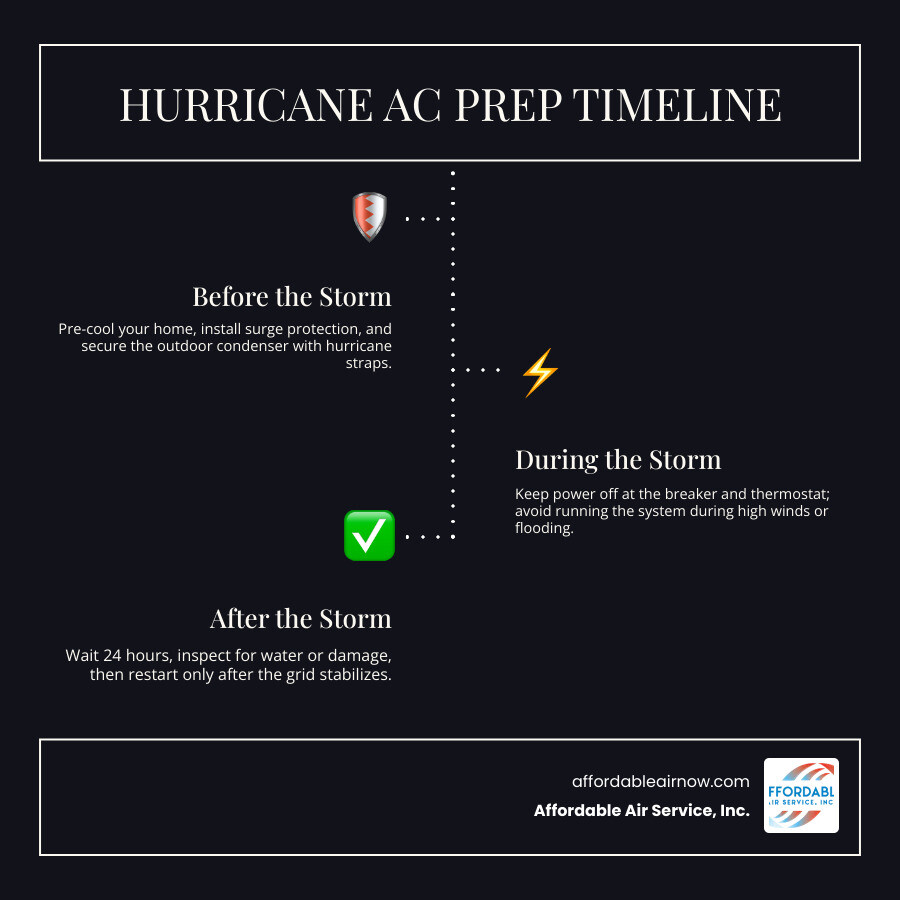
Knowing how to protect your ac during a hurricane could save you from severe system damage and weeks of miserable heat on Florida’s Emerald Coast. Here is a quick overview of the most important steps:
- Pre-cool your home by lowering the thermostat 3-5 degrees about 12 hours before the storm arrives.
- Turn off the system at both the thermostat and the circuit breaker before winds pick up.
- Secure the outdoor condenser with hurricane straps and clear a 10-foot radius of loose debris.
- Install a surge protector rated for HVAC systems to guard against lightning-induced voltage spikes.
- Handle window and portable units by removing or sealing them before landfall.
- Inspect before restarting — check for standing water, physical damage, and unusual sounds after the storm passes.
- Wait before powering back on to let the electrical grid stabilize and refrigerant pressures equalize.
Hurricane season runs June 1 through November 30, and the Emerald Coast sits squarely in the path of Gulf storms that can arrive fast and hit hard. In September 2022, Hurricane Ian left more than 2.1 million Floridians without power, and many came home to find their outdoor condensers crushed by flying debris. Flying objects alone account for 60% of avoidable AC damage during high-wind events — and that does not even count the flooding, saltwater corrosion, and lightning-induced power surges that follow.
Your AC system is one of the most significant investments in your home, often requiring a major replacement process if destroyed. A few simple steps taken before a storm can protect that investment. This guide walks you through everything you need to know — before, during, and after the storm — so you can stay cool on the other side of it.
For additional storm-readiness tips beyond your HVAC system, check out our guide on Spring Storm Preparation for Every Florida Homeowner.
Primary Threats to Your HVAC System During a Florida Storm
Living along the beautiful Emerald Coast in places like Santa Rosa Beach, Miramar Beach, and Destin means dealing with a unique coastal environment. While the salt air and gulf breezes are wonderful on a normal day, they present major hazards when a tropical storm or hurricane develops. Understanding what threats your outdoor condenser faces is the first step in learning how to protect your ac during a hurricane.

- Flying Debris and High Winds: Hurricane-force winds can easily exceed 74 mph, turning unsecured patio furniture, loose tree branches, and even roof shingles into dangerous projectiles. Debris causes 60% of avoidable AC damage during high-wind events. A single flying branch can dent the protective metal cage, bend the delicate aluminum fins, or slice through critical electrical and refrigerant lines.
- Storm Surge and Saltwater Flooding: If your home is in a low-lying area or close to the beach, storm surge is a major threat. Outdoor AC units are highly water-resistant against falling rain, but they are not designed to be submerged. Saltwater is particularly destructive. It triggers rapid galvanic corrosion on aluminum fins and copper coils within 24 hours of contact, which ruins the heat transfer capabilities of your system. To understand how coastal air affects your system even on a normal day, read about Why Salt Air is Your HVAC’s Worst Enemy.
- Lightning and Power Surges: Florida leads the nation in lightning strikes, with an average of 3,500 strikes per day. Lightning-induced surges are the number one cause of post-storm AC failure in the Florida peninsula. A single 60,000-amp surge can instantly fry the sensitive electronic control boards and inverter modules inside modern, high-efficiency AC systems.
- Grid Fluctuations: When the power grid struggles during a storm, the voltage can fluctuate wildly before dropping entirely. These rapid power drops and sudden “snaps” back to full voltage put immense stress on your compressor and fan motor. If the system is left running, these fluctuations can burn out the start capacitor or destroy the compressor motor entirely.
Pre-Storm Checklist: How to Protect Your AC During a Hurricane
When a storm is heading toward Northwest Florida, your to-do list grows rapidly. To make preparation straightforward, we have broken down the essential tasks into a quick-reference checklist.
| Preparation Task | DIY Difficulty | Why It Matters |
|---|---|---|
| Pre-Cool the House | Very Easy | Creates a “cool-storage battery” to keep your home comfortable without power. |
| Shut Off Power at Breaker | Easy | Prevents electrical surge damage and stops the system from running if covered. |
| Clear Surrounding Area | Easy | Eliminates potential projectiles that cause 60% of avoidable physical damage. |
| Secure with Hurricane Straps | Moderate | Keeps the heavy outdoor condenser anchored to its pad during 100+ mph winds. |
| Install Surge Protection | Professional | Protects sensitive circuit boards from lightning and grid power restoration jolts. |
To make sure your system is ready for the heat and storms of the season, check out our guide on AC Repair Maintenance in Ft. Walton Beach FL: Your Summer Checklist.
The Pre-Cooling Technique: Creating a Cool-Storage Battery
About 12 to 24 hours before the storm is projected to make landfall, turn your thermostat down 3 to 5 degrees lower than your normal comfortable setting. Keep your blinds closed, lock your windows, and seal any exterior doors tightly.
By running your system on a colder setting while the power grid is still stable, you lower the temperature of your home’s walls, flooring, and furniture. This essentially turns your house into a “cool-storage battery.” When you eventually shut down the system before the storm hits, your home will remain cooler and maintain lower humidity levels much longer during the subsequent power outage. Learn more about managing your home’s systems before severe weather in our article How to Prep Your Home Systems Before the Storm Hits.
Safe Shutdown Procedures: Thermostat and Breaker
Never leave your air conditioner running during a hurricane. Running the system during a major storm exposes it to severe electrical damage and forces the fan to pull in wind-blown debris and heavy rain.
To shut down your system safely:
- Go to your thermostat and switch the system mode to OFF.
- Locate your home’s main electrical panel.
- Find the circuit breaker labeled for your AC (often a double-pole breaker labeled “AC” or “HP”) and flip it to the OFF position.
- If your outdoor condenser has a physical pullout disconnect switch located in a small box on the wall near the unit, you can also pull the disconnect plug to ensure no electrical current can reach the system.
Flipping the breaker is a critical step. Simply turning off the thermostat does not isolate the outdoor unit from high-voltage surges traveling through the power lines.
Physical Safeguards: How to Protect Your AC During a Hurricane with Straps and Covers
Securing the physical structure of your outdoor unit is vital to prevent wind displacement and impact damage.
- Hurricane Straps and Concrete Pads: Florida Building Code requires outdoor condenser units to be securely bolted to a heavy concrete or composite hurricane pad. Inspect your unit annually to ensure the mounting bolts are tight and rust-free. For extra security, install heavy-duty, galvanized steel hurricane straps. These straps wrap over the top of the condenser cabinet and anchor directly into the concrete pad, preventing wind gusts from shifting or toppling the unit.
- Clearing the Perimeter: Maintain a strict 10-foot clear radius around your outdoor condenser. Trim back any overhanging tree branches, bushes, or climbing vines. Before the storm arrives, move all loose items indoors, including patio furniture, potted plants, garden hoses, toys, and trash cans.
- To Cover or Not to Cover? This is a common point of confusion. You should never run your air conditioner while it is covered, as this restricts airflow and will burn out the compressor motor in a matter of minutes. However, if you have completely shut off the power at the breaker, you can temporarily cover the unit right before the storm to prevent leaves, pine needles, and small twigs from packing into the fan blades and coils. Use a heavy-duty, breathable AC cover or a sturdy tarp secured tightly with ratcheting tie-downs or bungee cords. Loose tarps can easily flap in high winds and act like a sail, pulling the unit off its base. Alternatively, you can secure a piece of thick plywood over the top of the unit and weigh it down with heavy concrete blocks to protect against falling branches. To understand how salt and moisture can build up under tight covers, take a look at our article on The Silent AC Killer: How Salt Air Corrodes Your System.
Electrical Protection: Why You Need a Surge Protector
While physical damage from flying debris is easy to see, electrical damage from lightning and grid fluctuations is often invisible and far more common.
When lightning strikes a power line nearby, a massive voltage spike travels through the grid and into your home. This sudden jolt can melt control wiring, pop fuses, blow out capacitors, and destroy the insulation inside your compressor’s motor windings. Even if the unit does not fail immediately, a partial surge can weaken these components, leading to a mysterious system failure weeks or months down the road.
To prevent this, we highly recommend installing a dedicated, HVAC-rated surge protector directly at the outdoor electrical disconnect box. Devices like the Intermatic Compressor Defender are specifically designed to monitor incoming voltage and instantly disconnect power to the AC if a dangerous surge or drop in voltage is detected.
For the ultimate peace of mind, pair a dedicated HVAC surge protector with a whole-home surge protection system installed at your main electrical panel. This dual-layer defense shields your valuable heating and cooling equipment as well as your household appliances from major electrical events. To learn more about how coastal electricity and salt air affect your beachside property, read Why Your Beach House AC is Feeling a Bit Salty.
Handling Window and Portable Units Before Landfall
If you use window air conditioners or portable AC units in your home or vacation rental, they require special attention before a storm.
Window units are highly vulnerable during hurricanes. High-velocity winds can push directly against the unit, breaking the window frame or forcing the unit inside, which creates a massive opening for wind-driven rain. Additionally, the side accordion panels on window units are not airtight or watertight, making them a primary entry point for water intrusion.
Before the storm hits:
- Unplug the window unit.
- Carefully remove it from the window frame. This is usually a two-person job, as these units are heavy and awkward.
- Store the unit safely on the floor in an interior room or garage.
- Close and lock the window securely. If necessary, apply temporary weather-stripping or sealing tape around the window sash to prevent rain from blowing through the gaps.
For portable air conditioners that vent through a hose in the window:
- Turn off and unplug the unit.
- Remove the exhaust hose adapter from the window slide panel.
- Remove the slide panel from the window frame, close the window, and lock it tight.
- Move the portable unit away from windows and doors to an interior part of the room where it won’t be damaged if water breaches the window.
Post-Storm Recovery: Safely Inspecting and Restarting Your System
Once the storm has passed and it is safe to step outside, do not immediately rush to flip your AC breaker back on. Powering up a damaged or wet system can turn a simple repair into a total system replacement.
Before restoring power, perform a thorough visual inspection of your outdoor unit:
- Check for Standing Water: Was the unit submerged or surrounded by floodwaters? If standing water reached the lower level of the cabinet where the compressor and electrical wiring reside, keep the breaker off.
- Inspect for Physical Damage: Look for heavy dents, a shifted cabinet, bent copper lines, or loose electrical conduit. If the unit has tilted or slid off its concrete pad, the internal refrigerant lines may have cracked, leading to a leak.
- Look for Debris: Check inside the fan grille. Are there tree branches, leaves, mud, or roof shingles wedged inside the fan blades? Operating the fan with debris inside can bend the blades, unbalance the motor, or burn out the fan motor entirely.
- Sniff for Electrical Smoke: Stand near the unit and check for any burnt metallic or plastic odors. If you smell electrical smoke, there may be shorted wiring inside.
- Listen Closely: If you attempt to restore power later and hear loud clicking, buzzing, or humming noises without the fan spinning, turn the breaker off immediately.
If you find that your system is unresponsive or showing signs of trouble after a storm, read our helpful guide on what to do when your AC Not Turning On After Storm.
Step-by-Step Guide on How to Protect Your AC During a Hurricane Recovery Phase
Once you have completed your visual inspection and confirmed the outdoor unit is clear of debris and dry, follow this step-by-step restart protocol to safely bring your system back online:
- Remove All Temporary Covers: Double-check that all tarps, plywood boards, ratcheting straps, or protective covers have been completely removed from the outdoor unit.
- Wait for Grid Power to Stabilize: When municipal power is first restored to your neighborhood, the electrical grid can be highly unstable. Voltage fluctuations and sudden brownouts are common during the first 20 to 30 minutes of restoration. Keep your AC breaker off during this initial stabilization window to protect your system’s compressor and control boards.
- Restore Power at the Breaker: Once the utility power is stable, go to your main electrical panel and flip the AC circuit breaker back to the ON position. If you removed the outdoor disconnect plug, insert it back into the disconnect box.
- Wait 5 to 10 Minutes Before Cooling: Do not immediately turn your thermostat to “Cool.” Keep the thermostat set to OFF for about 5 to 10 minutes after restoring power at the breaker. This delay allows the internal heating element (crankcase heater) to warm up the compressor oil and lets the system’s internal refrigerant pressures equalize. This prevents “compressor slugging,” which occurs when liquid refrigerant enters the compressor cylinder and causes severe mechanical damage.
- Switch the Thermostat to Cool: After the brief wait, set your thermostat to COOL and adjust the temperature setting to a few degrees below the current indoor temperature.
- Monitor the System: Walk outside and confirm that the outdoor fan is spinning smoothly and that warm air is blowing out of the top of the unit. Inside, check that cool air is flowing from your supply registers. Listen for any unusual rattling, vibrating, or squealing noises.
If you notice any unusual behavior or if the system fails to cool, consult our troubleshooting tips in Don’t Sweat It: How to Tell If Your AC Is About to Quit.
Preventing Mold and Moisture in Your Ductwork After Power Loss
During an extended power outage along the Emerald Coast, indoor temperatures and humidity levels rise rapidly. When the relative humidity inside your home exceeds 60% and temperatures sit in the 80s, conditions become ideal for mold growth. Mold spores can begin to colonize on organic dust inside your ductwork and air handler within 48 hours of a power loss.
To prevent mold and preserve your indoor air quality after a hurricane:
- Keep the Home Sealed: While the power is out, keep windows and doors closed as much as possible to trap the dry air inside. Opening windows lets the extremely humid, salty coastal air rush in, accelerating moisture buildup on walls and inside ceiling registers.
- Run the AC on “Auto” Mode: Once power is restored, run your system with the fan setting on AUTO, not “ON.” Running the fan continuously can blow moisture off the evaporator coil back into your home, raising indoor humidity levels.
- Inspect the Air Handler: Check the indoor closet or attic space where your air handler is located. Look for any signs of water dripping from the ceiling or condensation pooling around the unit. Ensure the condensate drain line is clear and flowing freely.
- Schedule Professional Duct Cleaning: If your home was without power for several days and experienced high indoor humidity, it is wise to have your ductwork professionally inspected. A technician can check for damp insulation, standing water in the ducts, or early signs of mold growth.
To learn more about protecting your home’s air quality and extending the life of your system in our humid coastal climate, read Don’t Let the Gulf Coast Environment Kill Your HVAC System Early.
Insurance and Warranties: What is Covered After a Hurricane?
Dealing with storm damage can be stressful, and navigating insurance claims and manufacturer warranties is often confusing. Understanding your coverage beforehand can make a major difference in how quickly you can get your home comfortable again.
- Standard Homeowners Insurance: In approximately 95% of standard policies, homeowners insurance covers physical damage to your air conditioning unit caused by wind-force events or falling debris (such as a tree branch crushing your condenser). However, these policies typically carry a specific hurricane deductible, which often ranges from 2% to 5% of your home’s total insured value.
- Flood Insurance: Standard homeowners policies do not cover damage caused by rising water, tidal surges, or coastal flooding. If your outdoor condenser is submerged during a storm surge, you must file a claim through a separate flood insurance policy, typically managed through the National Flood Insurance Program (NFIP). That new flood insurance policies generally require a 30-day waiting period before coverage takes effect, so you must have this policy in place well before a storm threatens.
- Manufacturer Warranties: Standard manufacturer warranties cover defects in parts and workmanship under normal operating conditions. They explicitly exclude “acts of God,” which means they will not cover repairs or replacements needed due to lightning strikes, floods, or hurricane-force wind damage.
- Crucial Documentation Steps:
- Take “Before” Photos: At the start of every hurricane season, take clear, date-stamped photos of your outdoor condenser, its mounting pad, your electrical disconnect box, and your indoor air handler.
- Keep Maintenance Records: Insurance adjusters often ask for proof of regular system maintenance to confirm the unit was in good working order before the storm. Keep copies of all service invoices and maintenance agreements.
- Take “After” Photos: If your system is damaged during a storm, document the damage from multiple angles before moving any debris or attempting repairs.
- Get a Professional Assessment Report: If you file an insurance claim, have a licensed HVAC technician provide a written diagnostic report detailing the exact cause and extent of the damage. This documentation is essential for verifying your claim.
For more information on the typical lifespan of air conditioning systems in our demanding coastal environment, read The 10-Year Itch: Average AC Lifespan in Humid Coastal Climates.
Frequently Asked Questions
Can I run my central AC on a portable generator after a storm?
In almost all cases, no. A standard 3-ton central air conditioner requires a massive amount of electrical current — typically between 15,000 and 18,000 watts — just to start the compressor (known as locked rotor amperage). Most common portable generators only produce between 5,000 and 7,500 watts of continuous power. Attempting to start a central AC on an undersized generator will stall the generator, trip its breaker, or potentially damage your compressor motor. You should only run your central AC on a generator if you have a properly sized, whole-home standby generator installed by a licensed professional.
What should I do if my outdoor AC unit was submerged in floodwater?
If your outdoor condenser was submerged in floodwater — especially salty or brackish water — do not turn it on. Even after the water recedes, mud, silt, and salt deposits remain trapped inside the electrical contactors, fan motor, and compressor terminals. Powering up a wet or dirty system can cause an instant short circuit, permanently destroying the electrical components. Keep the breaker off and schedule a professional inspection. A technician will need to thoroughly wash down the coils, clean out the electrical cabinets, check insulation resistance, and verify that all safety controls are operating correctly before it is safe to restore power.
Does standard homeowners insurance cover hurricane damage to an AC unit?
Yes, standard homeowners insurance typically covers damage caused by high winds and falling objects, such as a tree limb falling on your condenser or flying debris denting the cabinet. However, this coverage is subject to your policy’s hurricane deductible. Damage caused by rising floodwaters or storm surge is not covered by standard homeowners insurance and requires a separate flood insurance policy.
Conclusion
Protecting your air conditioner during a hurricane requires proactive preparation, quick action as landfall approaches, and a cautious approach during recovery. By pre-cooling your home, shutting down power at the breaker, securing your outdoor unit, and utilizing dedicated surge protection, you can safeguard your cooling system from wind, water, and electrical damage.
At Affordable Air Service, Inc., we have been helping our neighbors along Florida’s Emerald Coast prepare for and recover from major storms for decades. Based in Santa Rosa Beach, we provide comprehensive air conditioning installation, repair, and maintenance services 7 days a week. As an authorized Daikin dealer, we are proud to offer high-efficiency Daikin Fit systems backed by outstanding warranties to keep your home comfortable and resilient year-round.
Do not wait until a tropical storm watch is issued to secure your home’s comfort. Schedule your professional storm prep or post-storm inspection with Affordable Air Service today for prompt, reliable, and friendly service.