


Why Hurricane Season Preparation for Your Home Systems Can’t Wait
Hurricane season preparation for your home systems is one of the most important things you can do as a homeowner on the Emerald Coast before June 1st arrives. Atlantic hurricane season officially runs from June 1 to November 30, with the highest storm activity typically hitting between August and October. That gives you a window right now — in April and May — to get ahead of the rush.
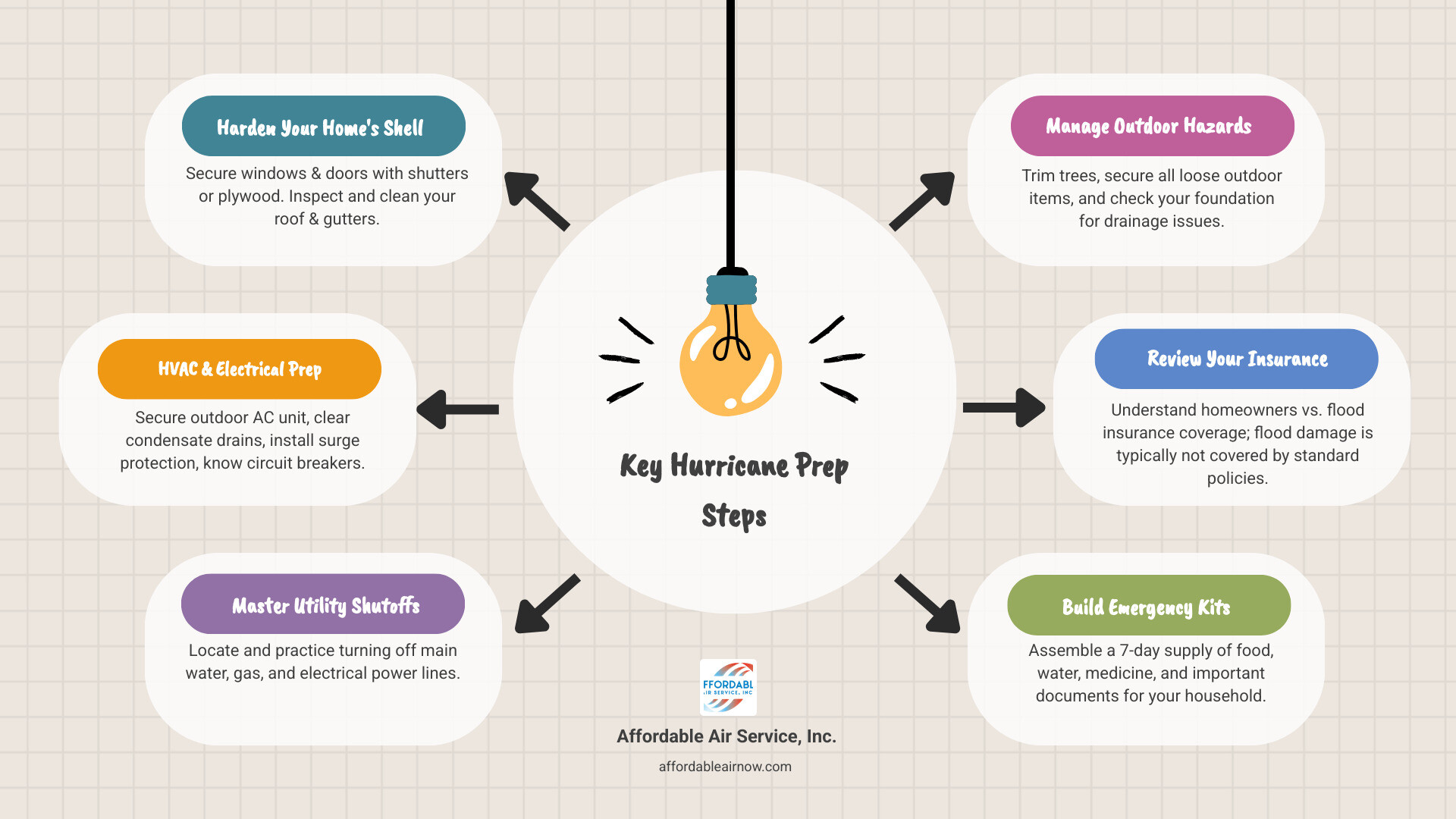
Here’s a quick overview of the key steps:
- Secure windows and doors with storm shutters, impact-resistant glass, or plywood
- Inspect your roof and gutters for loose materials and debris buildup
- Prepare your HVAC system by securing the outdoor unit, clearing condensate drains, and installing a surge protector
- Know your utility shutoffs for gas, water, and electricity before a storm approaches
- Trim trees and secure outdoor items that could become dangerous projectiles
- Check your foundation for cracks, drainage issues, and soil erosion
- Review your insurance — standard homeowners policies do not cover flood damage
- Build a home emergency kit with at least a one-week supply of essentials
Most homeowners wait until the warning sirens sound. By then, store shelves are empty, contractors are booked solid, and there’s no time left for real fixes. Preparing early means your home — and every system inside it — has time for the repairs and upgrades that actually hold up when a major storm rolls in off the Gulf.
The Emerald Coast sits squarely in one of the most hurricane-active regions in the country. Wind, storm surge, heavy rain, and power outages don’t just damage walls and roofs — they knock out your air conditioning, flood your electrical panels, stress your plumbing, and leave you without power or clean water for days. A whole-home approach to preparation is the only approach that works.
Hardening the Shell: Windows, Doors, and Roof Readiness
Before we dive into the internal mechanics of your home, we have to look at the “shell.” If the exterior fails, your HVAC, electrical, and plumbing systems are immediately at risk from water and wind. In our experience serving the Emerald Coast, the most resilient homes are those that adhere strictly to modern building codes. In fact, research shows that over 95% of construction damage during major hurricanes like Maria and Irma occurred in structures that were not code-compliant.
Windows and Doors
Your windows and doors are the primary points of entry for high-pressure winds. Once a window breaks, the internal pressure of your home can rise rapidly, potentially leading to roof failure.
- Storm Shutters: These are the gold standard. Whether they are roll-down, accordion, or Bahama style, they provide a permanent barrier against flying debris.
- Impact-Resistant Glass: If you are upgrading your home in Santa Rosa Beach or Destin, consider impact-rated windows. They look like standard glass but are designed to stay intact even when struck.
- Plywood: If shutters aren’t an option, 5/8-inch exterior-grade plywood is the minimum requirement. Have it pre-cut and labeled for each window now so you aren’t fighting for the last sheet at the hardware store in August.
- The Tape Myth: Never tape your windows. It doesn’t prevent breakage; it just creates larger, more dangerous shards of glass.
Roof and Gutters
Your roof is your first line of defense against the thousands of gallons of water a hurricane can dump.
- Inspections: Check for loose or missing shingles. If your roof is older, consider having a professional install hurricane straps or clips to strengthen the roof-to-wall connection.
- Soffit Reinforcement: High winds can blow out soffits (the underside of your roof overhang), allowing rain to drive directly into your attic. Ensuring these are properly fastened is a small step that prevents massive water damage.
- Gutter Cleaning: Clogged gutters cause water to back up under your shingles or pool around your foundation. Keeping them clear is vital preventative HVAC maintenance and general home care, as it keeps moisture away from your external units and crawl spaces.
Hurricane Season Preparation for Your Home Systems: HVAC and Electrical
When we talk about hurricane season preparation for your home systems, the HVAC unit is often the most vulnerable. It sits outside, exposed to the elements, and is connected to your home’s electrical grid. If you’ve ever dealt with your AC not turning on after a storm, you know how quickly a Florida home can become a sauna.
Essential HVAC Hurricane Season Preparation for Your Home Systems
The time to protect your air conditioner is during the calm of April and May. Here is what we recommend for every Emerald Coast homeowner:
- Secure the Unit: High winds can literally lift an outdoor condenser off its pad. Use hurricane straps or heavy-duty bolts to anchor the unit to its base.
- Surge Protection: Lightning strikes and power grid fluctuations are common during storms. A dedicated HVAC surge protector can save you from a total system replacement.
- Elevation: If you live in a low-lying area of Ft Walton Beach or Miramar Beach, check if your unit is elevated. Raising the unit just a foot or two can be the difference between a functional AC and a flooded scrap heap.
- Condensate Drains: Before the storm, ensure your AC drain lines are clear. High humidity means your system works harder, and a clog can lead to indoor flooding. Learning how to prevent AC drain line overflow is a crucial skill for the summer months.
- Pre-Cooling: If a storm is imminent, turn your AC down a few degrees lower than usual. This “banks” cold air in your home’s thermal mass, keeping you comfortable longer if the power goes out.
Regular maintenance is the best way to ensure your system is ready for the stress of a storm. This is why regular HVAC service is essential; a technician can spot loose panels or weak electrical components before the wind starts howling.
Electrical Safety and Hurricane Season Preparation for Your Home Systems
Your electrical system needs just as much attention as your AC.
- Circuit Breakers: Know which breaker controls your HVAC. If you notice your AC circuit breaker keeps tripping during regular use, get it fixed before hurricane season. You don’t want a weak breaker failing during a storm.
- Unplugging: As the storm approaches, unplug sensitive electronics. Power surges can jump across “off” switches.
- Generator Safety: Never run a generator indoors, in a garage, or near an open window. Carbon monoxide is a silent killer. Ensure your generator is on a dry, elevated surface at least 20 feet from the house.
Managing Critical Utilities: Water, Gas, and Plumbing
Plumbing and gas systems are often overlooked in hurricane season preparation for your home systems, but they are critical for post-storm recovery. Whether you are prepping your primary residence or following an Emerald Coast homeowners guide for vacation homes, utility management is key.
Water and Plumbing
- Main Shutoff: If you are evacuating, turn off the main water valve to your home. This prevents internal flooding if a pipe bursts due to structural damage.
- Water Storage: Fill bathtubs and large containers with water before the storm. This isn’t for drinking; it’s for manually flushing toilets if the municipal water system fails.
- Water Heaters: If you have an electric unit, turn off the breaker. If the tank is damaged or the water supply is cut, an electric water heater tripping the breaker is the least of your worries—the heating elements could burn out or cause a fire. For more details, check out our essential seasonal plumbing tips.
Gas Line Safety
- Propane Tanks: If you use propane for grilling or heating, ensure the tanks are anchored. A loose propane tank is a heavy, explosive projectile.
- Shutoff Valves: Know how to turn off your gas supply. If you smell gas after a storm, shut it off immediately and do not use any electrical switches, as a single spark could trigger an explosion.
Exterior Safety: Landscaping, Foundations, and Outdoor Hazards
Your yard can either protect your home or destroy it. In places like Freeport and DeFuniak Springs, large trees are beautiful but can be hazardous during 100-mph winds.
- Tree Trimming: Trim branches that hang over your roof or are close to power lines. Remove any dead or diseased trees that might fall.
- Projectile Prevention: Patio furniture, bird feeders, and even loose mulch can become dangerous. Bring furniture inside or anchor it firmly. Use shredded mulch rather than large nuggets, as it is less likely to wash away and clog your drainage systems.
- Foundation and Soil: Inspect your foundation for cracks. During heavy rain, water can seep into these cracks, causing structural instability. Ensure your soil is graded so that water flows away from the house. Gutters should discharge at least five feet away from the foundation to prevent pooling.
- Sump Pumps: If you have a basement or crawlspace with a sump pump, test it now. Ensure it has a battery backup, as power outages are almost guaranteed during a major hurricane.
The Financial and Survival Safety Net: Insurance and Kits
No amount of hurricane season preparation for your home systems can stop a storm, which is why you need a safety net. This includes both financial protection and physical survival supplies.
Understanding Your Coverage
Many homeowners in Florida are shocked to find that their standard policy doesn’t cover everything. Just one inch of floodwater can cause tens of thousands of dollars in damage, yet standard insurance typically excludes flooding.
| Feature | Homeowners Insurance | Flood Insurance (NFIP) |
|---|---|---|
| Wind Damage | Usually Covered | Not Covered |
| Rising Water/Surge | Not Covered | Covered |
| Waiting Period | Immediate (usually) | 30 Days |
| Coverage Limit | Varies by policy | Up to $250k (Structure) |
It is a common misconception that you only need flood insurance if you live on the beach. In reality, about 40% of NFIP claims come from areas designated as low-to-moderate risk. If you don’t have a policy yet, get one now—there is a mandatory 30-day waiting period before it takes effect. To learn more about protecting your investment, see our tips on avoiding AC repairs and preventative measures.
The Home Emergency Kit
You should be prepared to be self-sufficient for at least seven days. Your kit should include:
- Food and Water: One gallon of water per person per day. Non-perishable food that doesn’t require cooking.
- Health: A two-week supply of all medications and a robust first-aid kit.
- Documents: Keep digital backups of your insurance policies, birth certificates, and home inventory on a waterproof USB drive or in the cloud.
- Tools: A hand-crank radio, flashlights, extra batteries, and basic hand tools to shut off utilities.
Frequently Asked Questions about Hurricane Readiness
When is the best time to start hurricane season preparation for your home systems?
The best time is right now, in April or May. By the time a storm enters the Gulf, it is too late to schedule professional HVAC maintenance, install hurricane straps, or wait out the 30-day period for flood insurance. Early preparation allows you to tackle repairs calmly and ensures you aren’t caught in the last-minute rush.
Does standard homeowners insurance cover flood damage from hurricanes?
No. Standard homeowners insurance covers wind damage (like shingles blowing off), but it almost never covers damage from rising water or storm surges. You must purchase a separate flood insurance policy, typically through the National Flood Insurance Program (NFIP).
Should I leave my HVAC system running during a hurricane?
No. We recommend turning your HVAC system off at the thermostat and the circuit breaker before the storm hits. This protects the system from electrical surges and prevents the fan from sucking in salt spray, debris, or water, which can ruin the internal components.
Conclusion
Preparing your home for hurricane season is about more than just boarding up windows; it’s about ensuring that the systems that keep your family safe and comfortable—your HVAC, electrical, and plumbing—are resilient enough to weather the storm. At Affordable Air Service, Inc., we’ve seen how a little bit of foresight can prevent a lot of heartbreak.
Whether you’re in Santa Rosa Beach, Destin, or Okaloosa Island, our team is here to help you get your home ready. From installing surge protectors to securing outdoor units and performing full system inspections, we offer 7-day service and our Daikin Comfort Promise to give you peace of mind.
Don’t wait for the clouds to turn grey. Contact our team for a pre-season system inspection today and make sure your home is ready for whatever the 2026 season brings.