


The Science Behind What Shortens AC Lifespan in Salt Air and Humidity
To understand what shortens AC lifespan in salt air and humidity, we have to look at the microscopic level. The air along the Emerald Coast isn’t just breezy; it is filled with marine aerosols. These tiny droplets contain sodium chloride (salt), which is highly corrosive to the metals found in your air conditioner.
When these salt particles land on your outdoor condenser, they don’t just sit there. Salt is hygroscopic, meaning it actively attracts and holds moisture from our thick Florida air. This creates a persistent, damp, salty film on your unit’s metal surfaces. Once this happens, a chemical process called “anodic dissolution” begins. The salt acts as an electrolyte, allowing electrical currents to flow between different types of metal, which causes the metal to literally dissolve over time.
Research shows that salt air and humidity can corrode metal components 4 to 8 times faster in coastal environments than in dry inland climates. This is Why Salt Air Is Your Hvacs Worst Enemy.
| Feature | Inland AC System | Coastal/Emerald Coast AC |
|---|---|---|
| Average Lifespan | 12–15 Years | 7–10 Years |
| Corrosion Rate | Standard/Slow | 4x to 8x Faster |
| Annual Run Hours | 1,000–1,500 | 2,500–3,500 |
| Main Threat | Dust/Mechanical Wear | Salt Air/Humidity/Corrosion |
How Humidity Accelerates What Shortens AC Lifespan in Salt Air and Humidity
In a dry climate, salt might settle on a unit and stay dormant. However, in Santa Rosa Beach or Destin, our humidity acts as a catalyst. High humidity provides the constant moisture necessary for the salt to remain chemically active 24/7. This prevents the metal from ever truly drying out, keeping the “corrosion engine” running around the clock.
Furthermore, high humidity forces your AC to work much harder. A primary job of your system is dehumidification. Because our air is so saturated, the unit must run longer cycles to pull moisture out of the air. This increased workload, combined with the chemical attack from salt, is How Your Homes Systems Fight The Coastal Humidity War every single day.
Proximity to the Gulf and Corrosion Intensity
The closer you are to the water, the more intense the battle becomes. The “High-Risk Zone” is generally defined as anything within 1,500 feet of tidal water. In this zone, the concentration of marine aerosols is at its peak. Onshore winds from the Gulf of Mexico push these corrosive particles directly into your AC’s delicate fins. While the most severe damage happens right on the beachfront, salt air can travel 5 to 10 miles inland, meaning homes in Freeport or DeFuniak Springs aren’t entirely immune to these coastal effects.
Vulnerable Components: Where Salt Air and Humidity Strike First
Your outdoor unit is the front-line soldier in this war. While the indoor evaporator coil is tucked away, the outdoor condenser is exposed to the elements. The most vulnerable parts are the condenser coils and the thin aluminum fins that surround them. These fins are designed to dissipate heat, but their large surface area makes them a perfect “landing strip” for salt.
When salt accumulates here, it leads to The 10 Year Itch Average Ac Lifespan In Humid Coastal Climates, where the system begins to fail just as it hits a decade of service.
Galvanic Corrosion and Metal Degradation
Most AC coils are made of two different metals: copper tubing and aluminum fins. When salt and moisture (the electrolyte) connect these two dissimilar metals, it creates a tiny “battery” effect. The more reactive metal (the aluminum) begins to sacrifice itself to protect the copper.
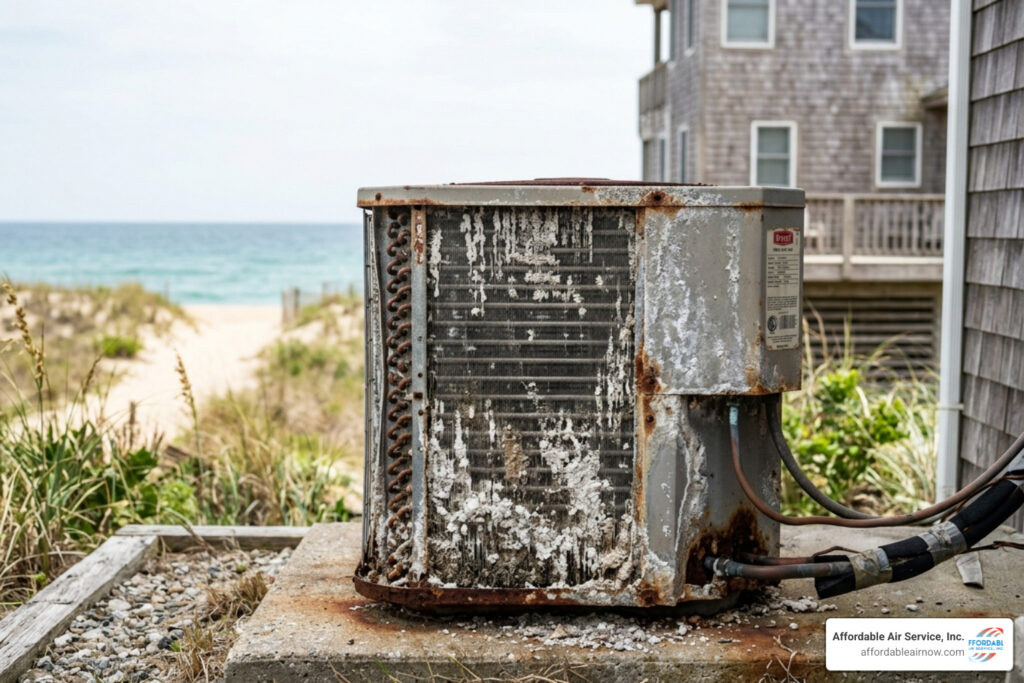
This results in “pitting corrosion,” where the aluminum fins become brittle and eventually turn into a white, powdery substance. When the fins disappear, the unit can no longer release heat efficiently, which is why you should look for Beat The Humidity With These Smart Ways To Cool Your Coastal Home that include specialized coastal equipment.
Electrical Failures and Cabinet Rust
It isn’t just the coils that suffer. Salt air is notoriously hard on electrical components like contactors and capacitors. Salt residue can cause electrical “tracking” or shorts, leading to a system that won’t start on a hot July afternoon. Additionally, standard steel hardware and cabinet panels will begin to perforate. At Affordable Air Service, we often see units where the bottom pan has completely rusted out, even though the internal compressor is still technically functional.
Warning Signs of Coastal Corrosion in Santa Rosa Beach
Knowing the early signs can save you from a total system meltdown. One of the most common indicators is “white rust.” This looks like a crusty, powdery white substance on your aluminum fins. It is the visual evidence of oxidation. If you touch the fins and they flake off like dry crackers, the corrosion is advanced.
To keep your home comfortable, you must Keep Your Santa Rosa Beach Home Breezy With Proper Ac Maintenance that specifically addresses these coastal symptoms.
Performance Declines and Rising Bills
As corrosion eats away at your fins, the heat transfer efficiency of your system drops. Your AC has to run longer and work harder to achieve the same cooling effect.
- Rising Energy Bills: If your June bill is significantly higher than last year’s with similar weather, your system may be struggling with salt buildup.
- Longer Runtimes: The system seems to never turn off.
- The “Clammy” Feeling: The AC is cooling the air but failing to remove humidity because the coils are too degraded to reach the proper dew point.
Unusual Noises and Frequent Repairs
Corrosion weakens the structural integrity of the unit. You might hear rattling as brackets fail or the fan motor begins to vibrate because the bearings have been compromised by salt. Frequent refrigerant leaks are also common, as “formicary corrosion” creates microscopic holes in the copper tubing. If you find yourself calling for “minor” repairs every few months, the salt air may have already won the battle.
Proven Strategies to Extend Your Coastal AC Lifespan
While the environment is harsh, you aren’t helpless. There are several DIY and professional steps you can take to fight back against what shortens AC lifespan in salt air and humidity.
The simplest DIY step is freshwater rinsing. Every few weeks, turn off your AC at the thermostat and the outdoor disconnect, then gently rinse the outdoor unit with a garden hose. This washes away the salt film before it can bond to the metal. Be sure to use a light spray; a pressure washer will crush the delicate fins and cause more harm than good. You should also Extend The Life Of Your Air Conditioner by keeping vegetation at least two feet away to ensure maximum airflow and prevent moisture from being trapped against the cabinet.
Anti-Corrosion Coatings and Coastal-Rated Equipment
If you are installing a new system, we highly recommend choosing “Seacoast” rated equipment. These units often feature:
- Phenolic Epoxy or Electrofin Coatings: A factory-applied protective layer that shields the coils from salt.
- All-Aluminum Coils: By using a single metal for the whole coil, you eliminate the “galvanic couple” that causes copper-aluminum corrosion.
- Stainless Steel Hardware: Fasteners that won’t rust and fuse to the cabinet.
As a Daikin dealer, we offer Daikin Fit systems that are built to handle the rigors of the Emerald Coast, backed by the Daikin Comfort Promise.
Professional Maintenance to Combat What Shortens AC Lifespan in Salt Air and Humidity
Standard “once-a-year” maintenance isn’t enough for homes in Destin or Miramar Beach. Coastal systems require bi-annual professional inspections—once in the spring and once in the fall.
A professional technician can perform a deep coil cleaning using specialized pH-neutral cleaners that remove salt without damaging the metal. We also check electrical contacts for signs of pitting and ensure your “temperature split” is correct, which tells us if the corroded fins are still doing their job. This Pre Summer Ac Maintenance To Prevent Total Meltdowns is the best insurance policy for your coastal home.
Frequently Asked Questions
How much shorter is an AC lifespan near the ocean?
Inland systems often last 12 to 15 years. However, along the Gulf, the lifespan is typically reduced by 50%, falling to 7–10 years. In oceanfront properties within the 1,500-foot high-risk zone, a system might only last 3 to 5 years if it is not a coastal-rated model and is not regularly maintained.
Can I rinse my outdoor AC unit to remove salt?
Yes! In fact, we recommend it. Use a standard garden hose on a low-pressure setting. Always turn the power off first at the outdoor disconnect. Rinse the coils and the cabinet every 2 to 4 weeks to remove the salt film. Never use a pressure washer, as it will flatten the fins and restrict airflow.
How far inland does salt air affect air conditioners?
The most critical damage occurs within the first 1,500 feet of the water. However, because Florida is flat and the Emerald Coast experiences strong onshore winds, salt air can easily reach 5 to 10 miles inland. If you can smell the salt in the air after a storm, your AC is likely being affected.
Conclusion
Living on the Emerald Coast is a dream, but the salt air and humidity can quickly turn into an HVAC nightmare if you aren’t proactive. By understanding what shortens AC lifespan in salt air and humidity, you can take the necessary steps to protect your investment. Whether it’s through regular freshwater rinsing, choosing coastal-rated Daikin equipment, or scheduling bi-annual professional maintenance, you can beat the “Silent AC Killer.”
At Affordable Air Service, we’ve spent years helping our neighbors in Santa Rosa Beach, Fort Walton Beach, and Destin stay cool despite the harsh coastal environment. We offer 7-day service, free estimates, and easy financing to ensure your home remains a sanctuary.
Protect your coastal investment with professional AC services and schedule your Emerald Coast maintenance visit today.