


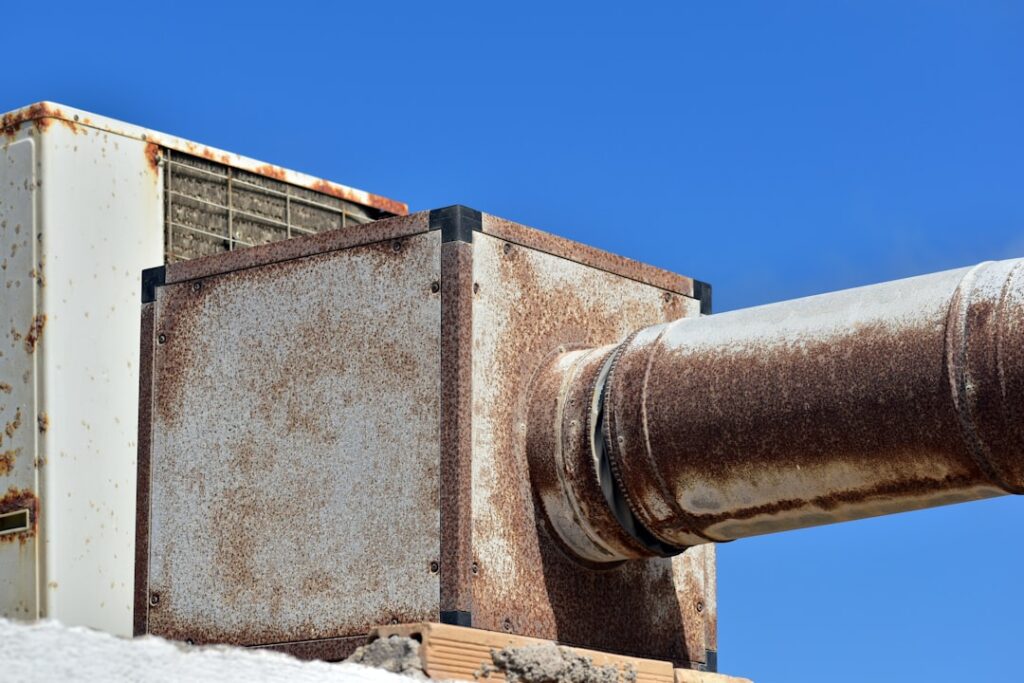
Why Salt Air and Year-Round Humidity Are Quietly Destroying AC Systems on the Emerald Coast
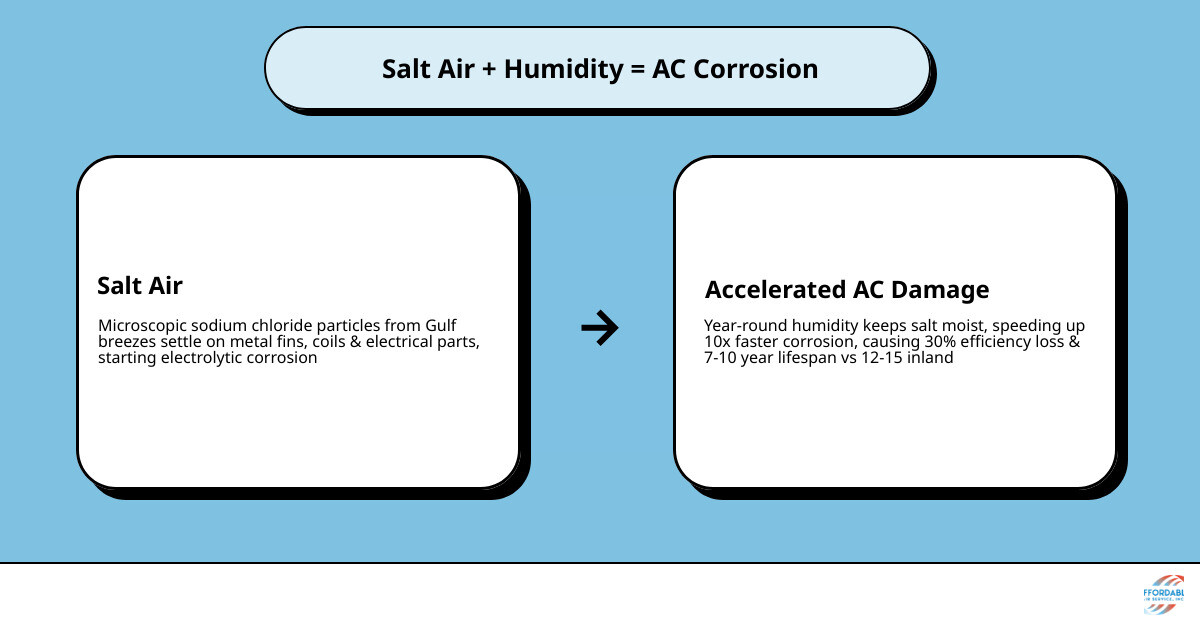
How salt air and year round humidity stress your ac comes down to two forces working together against your system every single day. Salt particles from the Gulf settle on metal surfaces and trigger corrosion. High humidity keeps those surfaces wet, which speeds up the chemical reaction. The result is a system that works harder, breaks down faster, and wears out years sooner than it should.
Here is a quick breakdown of what is happening:
- Salt air carries microscopic sodium chloride particles that land on your outdoor unit and eat through metal fins, coils, and electrical terminals
- Year-round humidity acts as a catalyst, keeping salt deposits moist and accelerating the corrosion process continuously
- Condenser coils lose their ability to transfer heat efficiently, forcing the compressor to run longer
- Electrical components corrode and draw higher amperage, leading to sudden failures
- Coastal AC systems often fail in 7 to 10 years, compared to 12 to 15 years for inland units
- Efficiency drops of up to 30% can occur before a coastal unit even reaches its fifth year
If you live in Santa Rosa Beach, Destin, Miramar Beach, or anywhere along the 30A corridor, your AC is fighting this battle every hour it runs. Homes within five miles of the shoreline face the highest risk, but wind carries salt particles several miles further inland — meaning even homes that are not directly on the beach are affected.
Gulf Coast systems like yours can log 2,500 to 3,500 operating hours per year, compared to just 1,000 to 1,500 hours in northern states. That is not just more wear — it is more wear in one of the harshest environments an AC system can face.
Knowing what is happening inside your unit is the first step toward protecting it. Let’s break it all down.
Understanding How Salt Air and Year Round Humidity Stress Your AC
Living in May 2026 on the Emerald Coast means enjoying the beautiful Gulf breezes, but those breezes are packed with marine aerosols. These aerosols are microscopic droplets of seawater containing sodium chloride. Because these salt particles are hygroscopic, they don’t just sit on your AC unit; they actively pull moisture out of the air.
In our region, classified as Climate Zone 1A, we deal with “very hot and humid” conditions. This means your AC isn’t just cooling the air; it’s battling a massive “latent heat” load—the heat held in water vapor. To learn more about this struggle, check out how your homes systems fight the coastal humidity war.
The Science of Coastal Corrosion
When salt lands on your AC, it creates an electrolytic film. This film turns your condenser unit into a giant, slow-motion battery. Through a process called galvanic reaction, the salt allows electricity to flow between different types of metal (like your aluminum fins and copper tubes), leading to rapid oxidation. In our coastal environment, metals can corrode up to 10 times faster than they would in a dry, inland climate. This isn’t just a problem for beachfront mansions; wind-borne salt creates a high-risk zone that extends at least 5 miles inland.
Why Humidity is a Mechanical Stressor
Humidity is the silent partner in AC destruction. Because the air is so heavy with moisture, your system must run extended cooling cycles just to dehumidify the home so you can feel comfortable. This constant workload stresses the compressor and leads to excessive wear. Furthermore, high humidity promotes mold and mildew growth on damp coils, which can clog the system and restrict airflow. This is exactly why salt air is your hvacs worst enemy.
The Most Vulnerable Components in Coastal HVAC Systems
When we inspect units in Fort Walton Beach or DeFuniak Springs, we see the same parts failing repeatedly due to environmental stress. The delicate aluminum fins on your outdoor unit are usually the first to go, followed by the copper refrigerant lines and the metal housing itself.
| Component | Standard Material | Coastal-Grade Alternative |
|---|---|---|
| Condenser Coils | Copper tube/Aluminum fin | All-aluminum or E-coated coils |
| Fasteners | Zinc-plated steel | Stainless steel |
| Cabinet | Painted galvanized steel | Marine-grade powder coat |
| Fan Blades | Standard aluminum | Coated or composite materials |
Condenser Coils and Refrigerant Leaks
The condenser coils are the lungs of your system. Salt air causes “pitting” and “formicary corrosion”—microscopic tunnels that eat through the metal. This leads to refrigerant leaks that are often invisible to the naked eye but devastating to your comfort. As the metal degrades, heat transfer becomes less efficient, leading to a 30% efficiency loss. You might notice “white rust,” a powdery substance on the fins, which is a sure sign that the aluminum is literally turning into dust.
How salt air and year round humidity stress your ac fan motors
Your outdoor fan motor is constantly sucking in salty, sandy air. This grit can penetrate the motor bearings, leading to grinding noises and eventually total motor burnout. Salt-crusted blades also become unbalanced, putting even more strain on the motor as it wobbles through its cycle.
How salt air and year round humidity stress your ac electrical parts
Salt is conductive. When it settles on contactors, capacitors, and terminals, it creates bridges for electricity to flow where it shouldn’t. This leads to terminal pitting, high amperage draw, and frequent short circuits. Because the humidity keeps these components damp, the risk of electrical failure is constant.
Identifying the Signs of Environmental Damage
Early detection is the key to avoiding a total system replacement. If you catch the damage early, we can often perform repairs that extend the life of the unit. For more context on why this matters, read about the 10 year itch average ac lifespan in humid coastal climates.
Visual Red Flags to Watch For
- Brittle Fins: If the silver “grill” on your unit flakes off like dry leaves when touched, the corrosion is advanced.
- Orange Rust: Visible rust on the cabinet or base pan.
- White Powdery Residue: This is aluminum oxide, a clear sign your coils are being eaten away.
- Bent or Flattened Fins: Salt and debris can weaken the metal until the fins collapse, blocking airflow.
Performance Indicators of Salt Stress
Is your system “short cycling” (turning on and off rapidly)? Or perhaps you’ve noticed “Dirty Sock Syndrome”—a musty, moldy smell coming from your vents. These are signs that humidity and salt have compromised your system’s ability to breathe. With coastal units logging over 2,500 annual operating hours, these performance issues often lead to frozen coils and inconsistent cooling throughout your home.
How to Protect Your AC from the Harsh Gulf Coast Elements
You don’t have to just sit back and watch the salt win. There are several ways to beat the humidity with these smart ways to cool your coastal home and protect your equipment.
Essential DIY Maintenance Steps
The most effective thing you can do is perform a monthly fresh water rinse. Turn your AC off at the thermostat and use a low-pressure garden hose to gently wash the salt off the outdoor coils. Never use a pressure washer, as it will flatten the delicate fins. Also, ensure a 2-foot “no-fly zone” around your unit by clearing away sea oats, bushes, and debris that can trap moisture and salt against the cabinet.
Professional Protective Measures
For long-term defense, we recommend professional anti-corrosion coatings like phenolic epoxy or ElectroFin. These coatings create a barrier that salt cannot penetrate. When it’s time for a new unit, we suggest looking for “Seacoast coils” or all-aluminum designs that resist galvanic corrosion. Some specialized systems even use sacrificial anodes—the same technology used on boat motors—to attract corrosion away from vital parts.
How salt air and year round humidity stress your ac efficiency
Modern technology has given us better weapons for this fight. Variable-speed compressors, like those found in Daikin Fit systems, are excellent for our climate. They run at lower speeds for longer periods, which provides superior dehumidification compared to standard “on-or-off” systems. Look for units with high SEER2 ratings and coastal-rated cabinets to ensure you’re getting the best return on your investment.
Frequently Asked Questions about Coastal AC Stress
How far inland does salt air affect my air conditioner?
Microscopic salt deposits can travel much further than you think. While the first 1,500 feet from the shore is the “high-aerosol” zone, wind patterns can carry salt 5 to 10 miles inland. If you live in Miramar Beach or Freeport, your unit is still likely feeling the effects of the Gulf air.
Can I use a pressure washer to clean salt off my AC?
Absolutely not. A pressure washer will instantly flatten the aluminum fins, which kills airflow and will likely lead to a dead compressor. Stick to a gentle rinse with a standard garden hose.
How much shorter is the lifespan of a coastal AC unit?
Inland units in places like Tallahassee might last 15 years. On the Emerald Coast, the average lifespan drops to 7–10 years. Without proper maintenance and protective coatings, some standard units near the water have been known to fail in as little as 5 years.
Conclusion
Living on the Emerald Coast is a dream, but the environment can be a nightmare for your air conditioner. At Affordable Air Service, we understand the unique challenges of Santa Rosa Beach, Destin, and the surrounding areas. We’ve seen how salt air and year round humidity stress your ac, and we know exactly how to fight back.
Whether you need a specialized coastal maintenance plan, a protective coil coating, or a new salt-resistant Daikin Fit system, we are here to help. We offer 7-day service, free estimates, and the Daikin Comfort Promise to ensure your home stays cool and dry no matter how high the humidity climbs.
Protect your investment with professional coastal AC services and give us a call today to schedule your coastal-specific tune-up!