


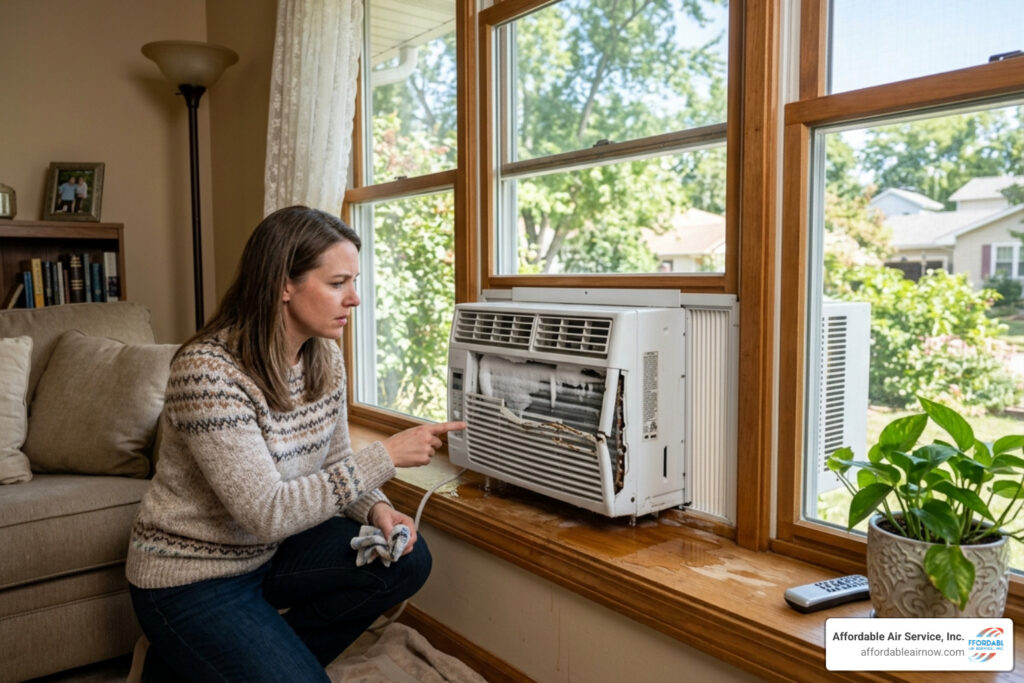
Is Your AC Going Bad? Here’s How to Tell Fast
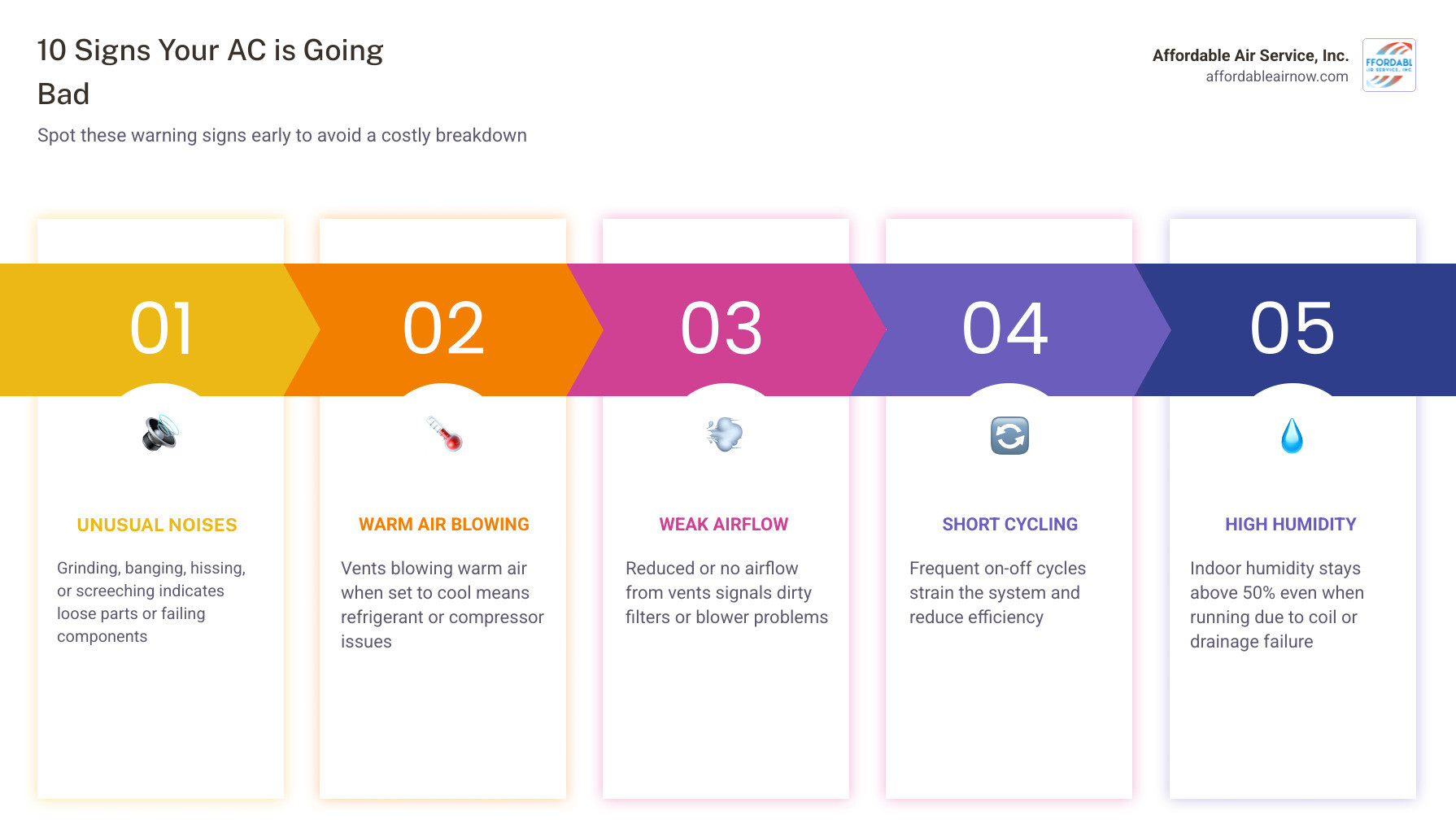
If you’re wondering how to know if your ac is going bad, here are the most common warning signs to watch for:
- Unusual noises – grinding, banging, hissing, or screeching from the unit
- Warm air blowing from vents when cooling is set
- Weak or no airflow through your vents
- Short cycling – the system turns on and off too frequently
- Rising energy bills – a 15-20% or more increase beyond normal rate changes
- Water leaks or ice forming on or around the unit
- Foul odors – musty, burning, or chemical smells
- High indoor humidity even when the AC is running
- Thermostat issues – the system won’t respond correctly
- Age over 10-15 years – nearing or past its expected lifespan
Living on Florida’s Emerald Coast means your AC works hard — sometimes year-round. The combination of high heat and heavy coastal humidity puts real strain on residential cooling systems. Most AC units are built to last around 10 to 15 years with proper care, but problems can start showing up well before that deadline.
The tricky part? Many of the early warning signs are easy to brush off. A little extra noise here, a slightly warmer room there — until one day the system stops working entirely, usually on the hottest afternoon of the summer.
Catching the signs early can save you from a full breakdown and a much bigger headache. This guide walks you through exactly what to look for so you can act before things get worse.
How to know if your ac is going bad: 10 Warning Signs

When we talk about how to know if your ac is going bad, we’re usually looking for a combination of symptoms. Your air conditioner is a complex machine that uses a cycle of evaporation and condensation to pull heat out of your home. When one part of that cycle fails, the whole system struggles.
One of the most obvious signs is weak airflow. If you place your hand near a vent and feel only a faint puff of air, your blower motor might be failing, or you could have a significant blockage in your ductwork. Even worse is when that air isn’t cold. If your AC is running constantly but not cooling, it’s a major red flag that your system has lost its efficiency or is facing a mechanical breakdown.
Another sign is “short cycling.” This happens when your AC turns on, runs for a few minutes, and then abruptly shuts off before the house is actually cool. This puts immense strain on the compressor and can lead to common AC repair issues that eventually require a full system replacement.
Understanding how to know if your ac is going bad through unusual noises
Your AC should run with a steady, predictable hum. If it starts sounding like a heavy metal band practicing in your backyard, you have a problem. Different sounds point to different issues:
- Grinding: This often indicates that the bearings in your blower motor have worn out.
- Banging or Clanking: This usually means a part has come loose inside the compressor or blower assembly and is hitting other components.
- Hissing: A classic sign of a refrigerant leak. Since refrigerant is under high pressure, it makes a distinct whistling or hissing sound as it escapes.
- Screeching: This high-pitched noise typically points to a fan motor or compressor bearing failure.
- Clicking: While a single click is normal at start-up, an AC unit making a clicking noise repeatedly often signals a failing electrical relay or a capacitor that can no longer hold a charge.
How to know if your ac is going bad based on high humidity levels
Here in Santa Rosa Beach and Freeport, we know humidity all too well. A major part of your AC’s job is to act as a dehumidifier. As warm air passes over the cold evaporator coil, moisture condenses on the coil and drains away. In a healthy home, your indoor humidity should stay between 30% and 50%.
If your skin feels sticky or your home smells musty despite the AC running, the system isn’t pulling enough moisture out of the air. This often happens when the AC evaporator coil is freezing. When the coil becomes a block of ice, it can no longer exchange heat or collect moisture properly. If you see ice on your indoor or outdoor unit, turn the system off immediately to prevent permanent damage.
Identifying a Failing AC Compressor
The compressor is often called the “heart” of your HVAC system. It’s responsible for circulating refrigerant between the indoor and outdoor units, changing it from a low-pressure gas to a high-pressure liquid. Because it does the heavy lifting, it is also the most expensive part to replace.
Knowing how to know if your ac is going bad often comes down to checking the compressor’s health. If the compressor’s electrical relay fails, the outdoor fan might spin, but the cooling cycle won’t actually start. You might notice the AC fan not working but still running in terms of the indoor blower, but without that compressor hum outside, you’re just circulating warm air.
Refrigerant leaks are another compressor killer. If the system is low on “juice,” the compressor has to work twice as hard to move the remaining refrigerant, leading to overheating. You might notice the AC refrigerant line freezing up, which is a clear sign that the pressure balance is off and your compressor is in danger.
Steps to Take Before Calling a Professional
We always recommend having a professional look at major electrical or refrigerant issues, but there are a few things you can check yourself to save time. Sometimes the fix is simpler than you think!
| DIY Check | What to Look For | When to Call Us |
|---|---|---|
| Thermostat Settings | Ensure it’s set to “Cool” and the temperature is lower than the room. | If the screen is blank or unresponsive. |
| Air Filter | A clogged filter blocks airflow and causes freezing. | If the filter is clean but airflow is still weak. |
| Circuit Breaker | Check if the AC breaker has tripped in your main panel. | If the AC circuit breaker keeps tripping repeatedly. |
| Outdoor Unit | Clear away leaves, dirt, or tall grass from the fins. | If the unit is making loud grinding or banging noises. |
| Condensate Line | Check the PVC drain pipe for clogs or standing water. | If you see water pooling around your indoor furnace/air handler. |
If you’ve recently had a bad storm in Destin or Fort Walton Beach, your system might have taken an electrical surge. If you find your AC not turning on after a storm, check the breakers first, but if that doesn’t work, there may be internal damage that requires troubleshooting common AC issues with professional tools.
When to Consider AC Replacement in Santa Rosa Beach
At some point, repairs stop being cost-effective. If your unit is over 10 years old and you’re seeing a 15-20% increase in your energy bills year-over-year (beyond standard utility rate hikes), it’s a sign that the system is losing its fight against the Florida heat.
A great way to test your system’s efficiency is the “temperature differential” test. The air coming out of your vents should be roughly 18 degrees Fahrenheit cooler than the air going into the return vent. If that gap is narrowing, your system is struggling.
Modern units come with much higher SEER (Seasonal Energy Efficiency Ratio) ratings than units built a decade ago. Upgrading can often pay for itself over time through lower monthly bills. If you’re seeing multiple AC replacement warning signs, it might be time to look at AC replacement key indicators to decide if a new unit is a smarter investment. We can help you determine when to consider AC replacement based on the specific climate needs of the Emerald Coast.
Frequently Asked Questions about AC Failure
Why is my AC blowing warm air instead of cool air?
This is usually caused by one of three things: a tripped circuit breaker for the outdoor unit, a refrigerant leak, or a failing compressor. First, check your thermostat and your breaker box. If those are fine, you likely have a mechanical issue that needs a technician’s eyes.
What does a burning smell from my vents signify?
A burning smell is usually an electrical issue. It could be a motor overheating or a wire that has shorted out. If you smell burning, shut off the system at the breaker immediately. This is a fire hazard and not something to ignore!
How often should I have my air conditioning unit serviced?
We recommend a professional tune-up at least once a year—ideally in the spring before the summer heat hits. Regular maintenance can prevent the “going bad” signs from ever appearing by catching small issues like loose wires or dirty coils before they cause a total breakdown.
Conclusion
Understanding how to know if your ac is going bad is the best way to protect your home’s comfort and your wallet. Whether it’s a strange clicking sound, a sudden spike in your electric bill, or a home that feels more like a sauna than a sanctuary, these signs are your AC’s way of asking for help.
At Affordable Air Service, we’ve seen it all across Santa Rosa Beach, Miramar Beach, and the surrounding areas. We pride ourselves on offering 7-day service and our Daikin Comfort Promise to ensure you’re never left sweating. With affordable pricing and easy financing, we make it simple to get your cool back.
If you’ve noticed any of these professional AC repair signs, don’t wait for a total collapse. Schedule your service with Affordable Air Service today for a free estimate and expert care.