


Why Extending the Life of Your AC on the Emerald Coast Is Harder Than It Sounds
If you want to know how to extend the life of your AC on the Emerald Coast, here is the short answer:
- Schedule professional tune-ups twice a year — once in spring before peak heat, once in fall.
- Replace air filters every 30 to 60 days — not the standard 90 days recommended in other regions.
- Rinse your outdoor unit monthly with a low-pressure garden hose to remove salt and debris.
- Flush your condensate drain line every 2 to 3 months to prevent algae buildup.
- Apply a corrosion-resistant coating to your outdoor coils to slow salt air damage.
- Install surge protection before hurricane season to protect electrical components.
- Watch for warning signs like weak airflow, short cycling, musty odors, or rising energy bills.
Following these steps consistently can keep a coastal AC system running for 10 to 12 years — or longer — even in one of the harshest climates in the country.
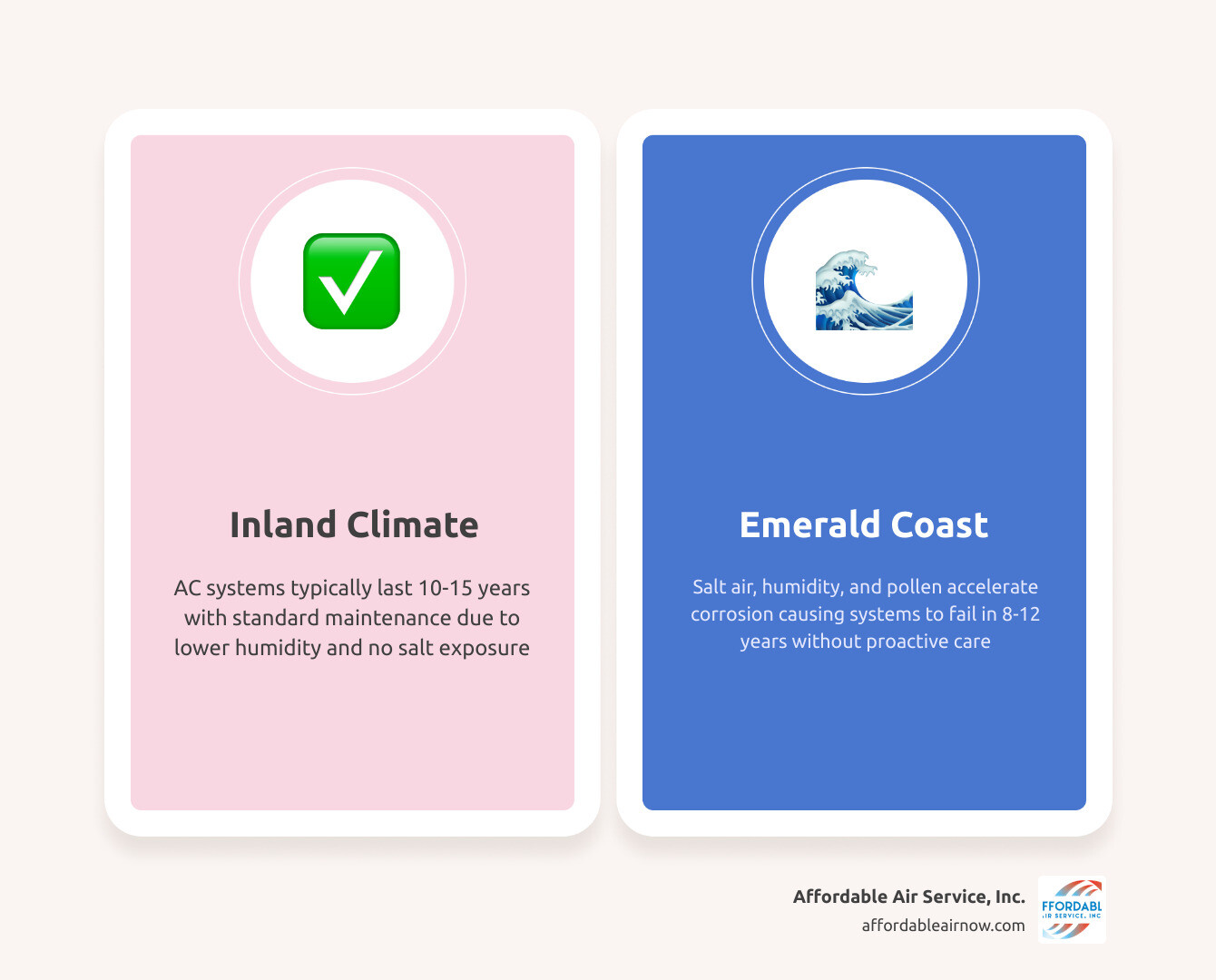
Living on the Emerald Coast comes with a lot of perks. The views, the beaches, the salt breeze rolling off the Gulf — it is hard to beat. But that same salt air, combined with year-round humidity and heavy pollen seasons, puts your air conditioner under stress that most homeowners do not fully appreciate. In coastal Florida, AC systems can wear out years sooner than they would in a drier, inland climate. A well-maintained system inland might last 15 years. On the coast, without the right care, that same system could give out in 8 years or less. The good news is that most of that wear is preventable — if you know what to do and when to do it.
How to extend the life of your ac on the emerald coast terms explained:
The Coastal Threat: How to Extend the Life of Your AC on the Emerald Coast Against Salt and Humidity
To understand how to protect your cooling system, you first have to understand what it is up against. The beautiful environment from Destin to Santa Rosa Beach is actually a highly corrosive, high-stress combat zone for HVAC equipment.
The primary culprit is salt air. Wind blowing off the Gulf of Mexico carries microscopic salt particles miles inland. When these salt particles land on your outdoor condenser unit, they do not just sit there. They attract moisture from our near-constant high humidity. This creates a highly corrosive electrolyte solution that attacks the copper tubing and aluminum fins of your system.
This process leads to galvanic corrosion. Because copper and aluminum are dissimilar metals, the presence of salt water causes a chemical reaction that eats away at the metal. This is often referred to as “coil rot,” which eventually causes microscopic pinhole leaks in your refrigerant lines. Once your refrigerant leaks, your system loses its ability to cool, the compressor works twice as hard, and eventually, the entire unit suffers a catastrophic failure.
To make matters worse, our heavy spring pine pollen seasons coat these damp, salty coils in a sticky, yellow blanket. This mixture of salt, moisture, and pollen forms a thick crust that acts as an insulator, trapping heat inside the system and forcing it to run longer, hotter cycles. To protect your investment, you must take active steps to counteract these environmental stressors. Reading up on how to Don’t Let the Gulf Coast Environment Kill Your HVAC System Early is the first step toward saving your system from premature failure, as well as understanding Why Salt Air Is Your HVAC’s Worst Enemy.
Understanding the 10-Year Itch and Coastal Lifespans
In standard inland climates, an air conditioning system can easily run smoothly for 12 to 15 years with basic maintenance. However, as of June 2026, data shows that coastal Florida systems that do not receive specialized care often fail between 7 to 10 years of service. This premature decline is known as the “10-year itch.”
Without regular preventative maintenance, the salt air and heavy runtime—averaging over 2,500 hours per year in Florida—will quickly cut your equipment’s lifespan in half. When you live near the Gulf, you cannot treat your HVAC system like an appliance that you set and forget. It requires specialized coastal care to survive. You can learn more about this phenomenon by reading about The 10-Year Itch: Average AC Lifespan in Humid Coastal Climates to see why our local environment demands a more proactive approach.
Essential Maintenance Schedules for Coastal Florida Homes
To combat the relentless coastal elements, Emerald Coast homeowners must adhere to a strict, specialized maintenance schedule. While inland homeowners might get away with an annual system checkup, beachfront and near-coastal properties require a bi-annual professional tune-up strategy to keep their systems running efficiently.
By scheduling professional maintenance twice a year—ideally in the spring before the intense summer heat waves arrive, and in the fall after the hurricane season wraps up—you can prevent up to 80% of common AC failures before they happen. Regular care ensures that minor salt accumulation, microscopic refrigerant leaks, and electrical wear are caught and corrected before they turn into major, expensive breakdowns during a humid July afternoon. To keep your system on track, follow Don’t Sweat It: The Ultimate Florida AC Maintenance Schedule and implement these Preventative HVAC Maintenance Tips year-round.
Spring vs. Fall: How to Extend the Life of Your AC on the Emerald Coast Seasonally
Each season brings different challenges for your HVAC system. Dividing your maintenance tasks between spring and fall ensures your system is optimized for both heavy cooling demands and seasonal weather shifts.
Here is a checklist of the essential tasks that should be performed during your seasonal visits:
- Spring Maintenance Focus (Preparing for Peak Summer):
- Thorough Coil Cleaning: Neutralize and wash away salt crust, pine pollen, and dirt from the outdoor condenser coils to maximize heat transfer.
- Refrigerant Level Verification: Check for subcooling and superheat levels to ensure there are no pinhole leaks caused by salt corrosion.
- Electrical Inspection: Inspect and tighten electrical connections, check contactors for pitting, and test capacitors to prevent mid-summer electrical failures.
- Condensate Drain Line Flush: Clear out algae, mold, and sludge that accumulated during the high-humidity spring months to prevent indoor water damage.
- Blower Motor & Fan Calibration: Inspect and lubricate moving parts to ensure optimal airflow.
- Fall Maintenance Focus (Post-Summer Recovery & Winter Prep):
- Storm Debris Removal: Clear out sand, leaves, pine needles, and twigs that may have been blown into the outdoor cabinet during summer storms and hurricanes.
- Heating Element Testing: Ensure the heat pump or auxiliary heating elements are operating safely before winter cold snaps hit the Panhandle.
- Ductwork Inspection: Check for leaks or loose connections that could waste up to 30% of your conditioned air.
- Cabinet Corrosion Check: Inspect the outdoor unit for signs of “white rust” or paint peeling and apply protective barriers where necessary.
Scheduling your Pre-Summer AC Maintenance to Prevent Total Meltdowns is the single best way to ensure your family stays cool when the summer humidity peaks.
Monthly DIY Tasks: How to Extend the Life of Your AC on the Emerald Coast Between Visits
While professional tune-ups are vital, there are several simple, high-impact tasks you should handle yourself between our visits to keep your system happy.
First, let’s talk about air filters. In high-humidity coastal areas, your AC runs almost continuously. This means your filters clog much faster than they would in other climates. We recommend checking your air filter every 30 days and replacing it at least every 30 to 60 days. A clean filter can reduce your system’s energy consumption by 5% to 15%, while a dirty filter restricts airflow, forces the blower motor to work harder, and can even cause your indoor evaporator coils to freeze up.
Second, you need to keep your condensate drain line clear. The extreme humidity on the Emerald Coast means your AC pulls gallons of water out of your indoor air every single day. This constant moisture creates a perfect breeding ground for algae and mold inside your drain line. To prevent water from backing up and damaging your drywall, perform a monthly vinegar flush. Simply pour a cup of distilled white vinegar down your condensate drain line access port to kill off any growing organic matter. For more helpful homeowner tips, check out our guide on how to Extend the Life of Your Air Conditioner.
Protecting Outdoor Condenser Coils from Salt Air Corrosion
If you live within 10 miles of the coastline—whether on Okaloosa Island, in Miramar Beach, or along Scenic Highway 30A—your outdoor condenser coils are constantly exposed to corrosive salt spray. Over time, this salt forms a hard crust over the aluminum fins, reducing your system’s cooling efficiency by 30% or more and leading to rapid metal decay.
To protect your coils, you should perform a monthly freshwater rinse. Turn off your AC system at the thermostat, take your garden hose, and gently spray down the outdoor unit from top to bottom.
- Crucial Rule: Always use a low-pressure garden hose. Never use a pressure washer. The high pressure from a power washer will instantly bend the delicate aluminum fins on your condenser coil, permanently restricting airflow and ruining your unit’s ability to shed heat.
For long-term protection, we highly recommend applying a professional, manufacturer-approved anti-corrosive coating to your coils. These specialized coatings form a microscopic barrier over the copper and aluminum surfaces, preventing salt molecules from making direct contact with the metal. This simple, preventative step can add years to your system’s lifespan and protect your manufacturer warranty, which can be voided if a system fails due to unaddressed salt accumulation. Learn more about how to stop The Silent AC Killer: How Salt Air Corrodes Your System before it is too late.
Recognizing Warning Signs and Preparing for Storm Season
On the Emerald Coast, your air conditioner works hard, and it will usually try to tell you when it is struggling. Ignoring these warning signs can turn a simple, inexpensive repair into a complete system replacement.
Keep an eye out for these common coastal red flags:
- Weak Airflow: If the air coming out of your vents feels weak or warm, you could be dealing with a failing blower motor, a clogged filter, or a frozen evaporator coil.
- Short Cycling: If your AC turns on and off rapidly every few minutes, it is experiencing short cycling. This is often caused by an oversized system, a faulty thermostat, or restricted airflow, and it places immense wear on your compressor.
- Musty Odors: Known locally as “dirty sock syndrome,” musty smells usually indicate mold or mildew growth on your indoor coils or standing water in your drain pan due to high humidity.
- Unusual Noises: Squealing, grinding, or loud rattling noises indicate worn-out motor bearings, loose fan blades, or a failing compressor.
Additionally, our summer storm and hurricane seasons pose severe electrical threats to your HVAC system. Lightning strikes and power grid fluctuations can instantly fry your system’s sensitive electronic control boards and compressor. To prevent this, we recommend installing a dedicated whole-home or HVAC surge protector at your outdoor disconnect box. Before a major storm hits, always turn your AC off at the thermostat and the main breaker to prevent electrical damage when the power flickers.
Here is a quick reference table to help you distinguish between normal coastal operation and warning signs that require professional attention:
| System Aspect | Normal Coastal Operation | Warning Sign (Call Us!) |
|---|---|---|
| Condensation | Moderate water dripping steadily from the outdoor drain line during humid days. | Standing water in the indoor drain pan, water stains on ceilings, or ice forming on copper lines. |
| Airflow Temperature | Crisp, cool air blowing consistently from all supply registers. | Warm or lukewarm air, or highly inconsistent temperatures between rooms. |
| System Cycle Length | Smooth, steady cycles lasting 15 to 20 minutes to properly dehumidify. | Turning on and off every 2 to 5 minutes (short cycling), or running 24/7 without cooling. |
| System Sounds | A quiet hum from the compressor and the steady whir of the outdoor fan. | Screeching, metal-on-metal grinding, loud clunking, or clicking sounds upon startup. |
| Indoor Humidity | Indoor relative humidity levels maintained comfortably between 45% and 55%. | Indoor humidity consistently above 60%, creating a sticky, muggy indoor environment. |
By recognizing these signs early, you can keep your home safe and comfortable. For more tips on keeping your system resilient through local weather patterns, read our comprehensive guide on Mastering the Panhandle: Best HVAC and Plumbing Setups for Coastal Living.
Frequently Asked Questions About Coastal AC Care
To help you navigate the unique challenges of maintaining a home in our beautiful coastal environment, we have gathered answers to some of the most common questions we receive from local homeowners.
How often should I rinse my outdoor AC unit if I live near the beach?
If your home is located within a mile of the beach (such as properties on Okaloosa Island or along Scenic Highway 30A), you should rinse your outdoor condenser unit once a month with a low-pressure garden hose. If you live slightly further inland (such as in Freeport or DeFuniak Springs), a quarterly rinse is usually sufficient.
Regularly washing away the invisible salt film prevents it from bonding to the metal and initiating the corrosion process. For detailed instructions on keeping your coastal system clean, read our article on how to Keep Your Santa Rosa Beach Home Breezy with Proper AC Maintenance.
When should I replace my coastal AC instead of repairing it?
If your system is over 10 to 12 years old, requires frequent repairs, or uses outdated R-22 refrigerant, it is usually more cost-effective to replace it rather than continuing to patch it up.
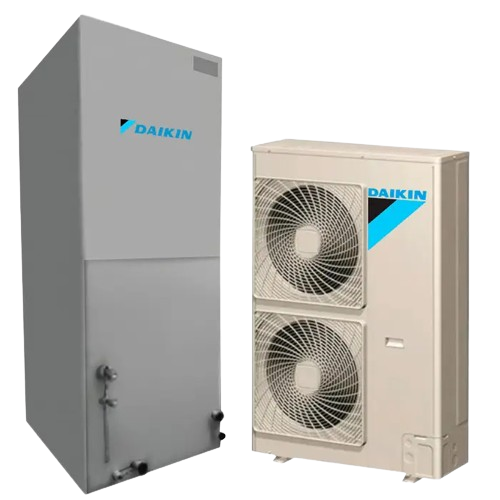
Older, corroded systems operate at significantly reduced efficiency, which drives up your monthly energy bills. Upgrading to a modern, high-efficiency system (like a Daikin Fit variable-speed system) can slash your energy bills while providing superior humidity control. To make the best decision for your home, review our Post-Replacement AC Maintenance Tips for Miramar Beach Homeowners and learn more about How to Maintain Your New AC Installation in Ft. Walton Beach.
Does regular maintenance really lower my monthly energy bills?
Absolutely. Neglected AC systems on the Emerald Coast can easily consume 20% to 40% more electricity as they struggle against dirty coils, clogged filters, and low refrigerant levels.
By contrast, consistent, professional maintenance can provide a 15% to 30% boost in operating efficiency, which translates directly into lower power bills during our long, hot summers. To see how routine service pays for itself, read about Why Regular HVAC Service Is Essential and explore our tips on How to Keep Your Coastal Home Dry and Cool Without Breaking the Bank.
Conclusion
Extending the life of your air conditioner on the Emerald Coast does not have to be a stressful, uphill battle. By committing to a consistent routine of monthly DIY care and scheduling bi-annual professional tune-ups, you can protect your system from the corrosive effects of salt air, pollen, and high humidity.
At Affordable Air Service, we are proud to be a locally owned and operated HVAC company serving Santa Rosa Beach, Destin, Miramar Beach, Freeport, Fort Walton Beach, DeFuniak Springs, and Okaloosa Island. As an authorized Daikin dealer, we are dedicated to providing our community with reliable, high-quality heating, cooling, and plumbing services. We back our work with the outstanding Daikin Comfort Promise and offer convenient 7-day service, free estimates on system replacements, and easy financing options through our partnership with GoodLeap.
Do not wait for a mid-summer breakdown to give your AC the attention it deserves. To keep your system running smoothly and your energy bills low, learn about The Real Benefits of an AC Maintenance Agreement and Schedule professional service today with our expert, local team. Let us help you keep your coastal home breezy, comfortable, and energy-efficient for years to come!