


How Hurricane Season Affects Your Home Systems on the Emerald Coast
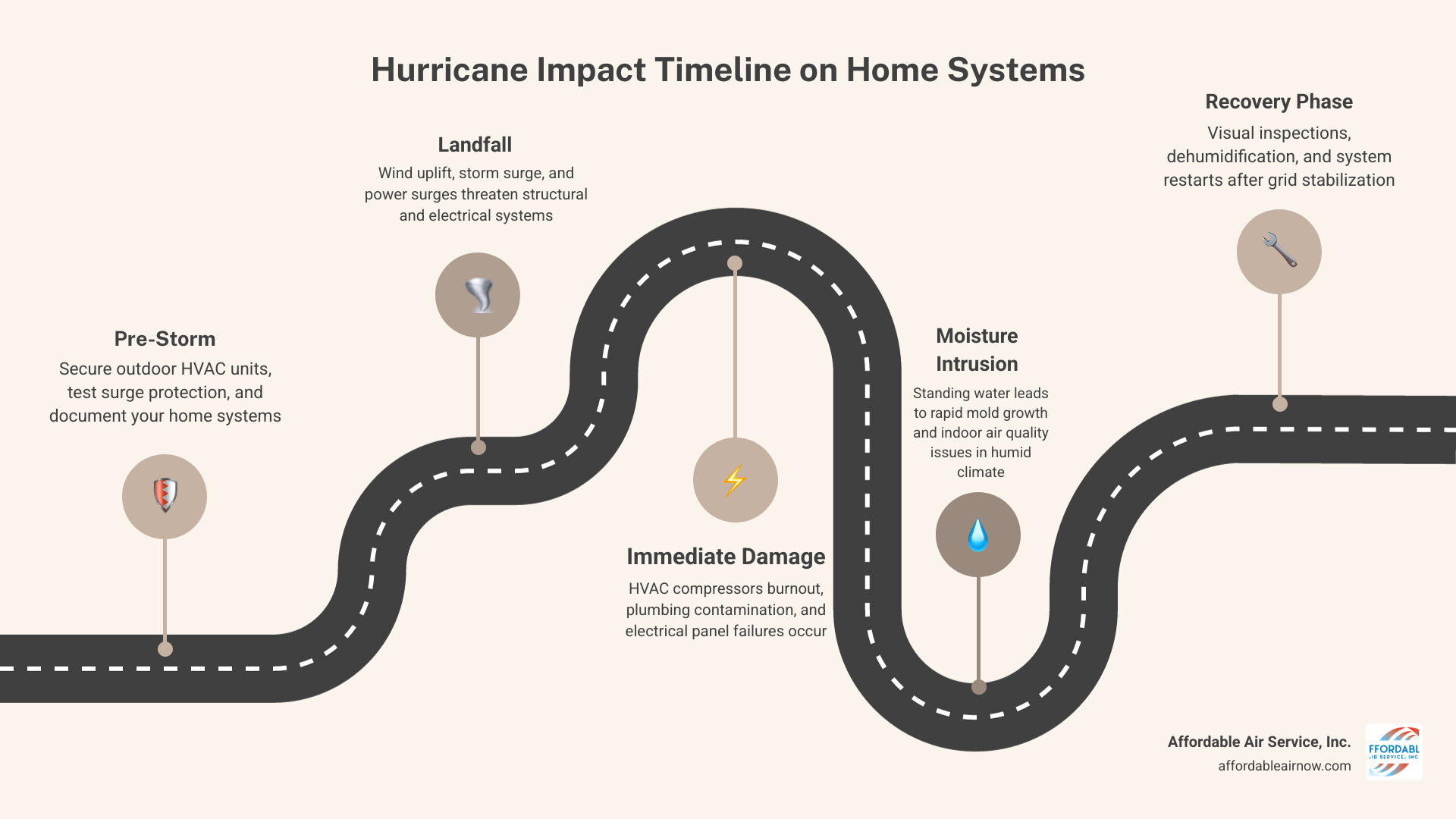
How hurricane season affects your home systems is one of the most important things to understand if you own a home along Florida’s Emerald Coast. From June 1 through November 30, Atlantic storms bring wind, rain, storm surge, and power outages that can damage your HVAC equipment, plumbing, electrical system, and indoor air quality — sometimes all at once.
Here is a quick look at the main ways hurricanes impact home systems:
- HVAC systems – High winds can shift or damage outdoor condenser units. Power surges burn out compressors and control boards. Flooding can total a unit completely.
- Electrical systems – Lightning strikes and grid fluctuations cause surges that fry appliances, panels, and smart home devices.
- Plumbing – Floodwater can contaminate water lines and damage water heaters or pumps.
- Indoor air quality – Moisture intrusion after a storm creates mold growth quickly, especially in Florida’s already humid climate.
- Structure – Wind uplift, storm surge, and flying debris threaten roofs, windows, doors, and foundations.
The Emerald Coast sits directly in the path of Gulf storms, making preparation more than a suggestion — it is a necessity. Florida has been hit by more hurricanes than any other state in U.S. history, and a single major storm like Hurricane Ian can cause over $113 billion in damage across the region. Even a tropical storm can knock out power for days and leave moisture problems that linger for weeks.
This guide walks you through everything you need to know — before, during, and after a storm — to protect your home systems and recover faster.
Structural and Electrical Vulnerabilities During Storms
When a major storm approaches communities like Destin, Miramar Beach, or Santa Rosa Beach, the physical structure of your home and its electrical grid face extreme stress. High winds and torrential rains do not just threaten your landscaping; they put immense pressure on your home’s structural load paths and electrical infrastructure.
Structural Load Paths and Wind Uplift
During a hurricane, wind blowing over a roof creates a lifting force known as wind uplift. If your home’s structural load paths are not properly reinforced, this force can peel the roof right off the walls. To prevent this, modern Florida building codes require hurricane straps or clips to create a continuous connection from the roof down to the foundation.
Additionally, heavy rains and storm surges saturated with water can cause significant soil movement. While standard foundations are built to handle up to 1 inch of soil shifting, highly expansive soils or severe coastal erosion can cause up to 4 inches of movement, leading to foundation cracks and structural instability.
Hardening the Exterior: Windows, Doors, and Garages
The best way to protect your interior home systems is to keep the storm outside. When wind breaches a window or door, it creates intense internal pressure that pushes upward on the roof while external winds pull it from the outside. This pressure differential is often what causes total structural failure.
- Impact Windows and Shutters: Installing impact-resistant windows or sturdy storm shutters prevents flying debris from breaching your home.
- Garage Door Reinforcement: The garage door is often the weakest point of a home during a hurricane. Standard doors can buckle under high winds, allowing massive amounts of air to pressurize the home. Upgrading to a wind-rated, reinforced garage door is critical for coastal properties.
Electrical Vulnerabilities and Lightning Strikes
Florida is widely known as the lightning capital of the United States. During a hurricane, lightning strikes and grid instability pose a constant threat to your electrical panel and home wiring.
A power outage itself is inconvenient, but the power surges that occur when the grid fluctuates or when power is restored can ruin your home systems. Installing whole-home surge protection at your main electrical panel helps safeguard sensitive electronics, smart thermostats, and major appliances from being fried by voltage spikes.
To ensure your home is fully prepared before the clouds roll in, check out our comprehensive guide on How to Prep Your Home Systems Before the Storm Hits.
How Hurricane Season Affects Your Home Systems: The HVAC Impact

Your heating, ventilation, and air conditioning (HVAC) system is one of the most expensive investments in your home. Understanding how hurricane season affects your home systems requires a close look at how outdoor AC condensers and indoor air handlers handle severe weather.
Windborne Debris, Saltwater, and Silt
An outdoor condenser is built to withstand normal outdoor exposure, but it is not designed to survive flying tree branches, heavy flooding, or corrosive saltwater.
- Debris Impact: Wind gusts exceeding 100 mph can turn everyday yard objects, loose gravel, and branches into high-velocity projectiles that bend condenser fins, puncture refrigerant lines, or smash fan blades.
- Saltwater Corrosion: For homes along Scenic Highway 30A, Miramar Beach, and Okaloosa Island, saltwater from storm surge is highly corrosive. Salt rapidly deteriorates the copper tubing and aluminum fins of your AC unit. To understand how coastal air degrades your system year-round, read our detailed post on Why Salt Air Is Your HVACs Worst Enemy.
- Silt and Mud: Floodwaters carry fine silt and mud that coat the interior of your condenser. Once this mud dries, it acts as an insulator, trapping heat inside the unit and causing the compressor to overheat and fail.
Electrical Surges and Compressor Burnout
Nearly 90% of all electrical system issues happen when an AC unit is left running during a hurricane or thunderstorm. When the power grid flickers, the rapid on-and-off cycling causes severe voltage fluctuations. This can scramble thermostat circuit boards, pop capacitors, and burn out your compressor motor.
To prevent this, we recommend two critical practices:
- Pre-Cooling: Pre-cool your home to 68°F about 12 to 24 hours before the storm is expected to make landfall. This turns your home into a “cool-storage battery.”
- The 20-Minute Rule: Once the storm hits, turn your AC completely off at both the thermostat and the circuit breaker. After power is restored post-storm, wait at least 20 to 30 minutes before turning the system back on. This allows the electrical grid to stabilize and prevents power surge damage.
Running vs. Shutting Down Your HVAC During a Hurricane
| Action | Pros | Cons | Recommendation |
|---|---|---|---|
| Leaving AC Running | Keeps the home cool and controls humidity as long as power stays on. | High risk of compressor burnout, electrical short-circuits, and debris damage. | Not Recommended. Avoid running the system during active storms or high winds. |
| Shutting Down HVAC | Protects control boards, prevents compressor failure, and eliminates risk of running with debris blockages. | Indoor humidity and temperature will rise during the outage. | Highly Recommended. Turn off at the thermostat and breaker before the storm hits. |
Protecting Your Cooling Equipment: How Hurricane Season Affects Your Home Systems
Protecting your outdoor unit requires physical safeguards. First, secure your outdoor condenser to a heavy concrete pad using heavy-duty, wind-rated hurricane straps. If you live in a low-lying, flood-prone area of Fort Walton Beach, Freeport, or Destin, consider elevating your outdoor unit on a metal or concrete stand at least two feet above the base flood elevation.
When it comes to covering your unit, use a breathable, hurricane-rated cover designed specifically for your model — but only after the system is completely powered off at the breaker. Never use airtight plastic tarps, as they trap moisture underneath, leading to rapid rust and corrosion on sensitive electrical components.
For a complete overview of the ideal coastal setups, explore our guide on Mastering the Panhandle: Best HVAC and Plumbing Setups for Coastal Living.
Post-Storm Recovery: Restoring HVAC, Plumbing, and Air Quality
Once the storm passes and it is safe to step outside, your immediate focus should shift to assessing and restoring your home systems safely.
Step 1: Conduct a Visual Inspection
Before restoring power to your home systems, perform a thorough walk-around of your property. Look for standing water around your outdoor AC unit, bent refrigerant lines, shifted equipment, or loose electrical conduit. If your outdoor unit was submerged in floodwater, do not turn it back on. Powering up a wet electrical system can cause catastrophic short circuits and completely ruin the unit.
Step 2: Clear Debris and Check Condensate Lines
Remove any leaves, branches, or mud accumulated around your outdoor unit. Check your indoor air handler and ensure the condensate drain line is clear. Heavy wind-driven rain can blow debris into external drain vents, causing water to back up into your home and damage your drywall.
If your system won’t start up after power is restored, read our troubleshooting guide on AC Not Turning On After Storm to identify common issues like tripped breakers or blown fuses.
Step 3: Protect Indoor Air Quality
While we often think of winterizing home systems to prevent freezing — as discussed in Don’t Let Your Pipes Freeze This Winter — our primary concern on the Emerald Coast during summer is moisture and mold. High humidity and water intrusion create a breeding ground for mold spores within 24 to 48 hours.
When cleaning up after a storm, always wear an N95 respirator to protect yourself from airborne mold, dust, and particulates. Change your HVAC air filters immediately, and run your system only when you are certain it is clean and dry.
Managing Moisture and Humidity: How Hurricane Season Affects Your Home Systems
The humidity along the Emerald Coast is relentless, and a prolonged power outage after a storm will quickly push indoor humidity levels past the safe 30% to 50% threshold. High indoor humidity leads to mold growth in your drywall, furniture, and ductwork.
To combat this, many homeowners install whole-home dehumidifiers that work alongside their central AC to pull moisture out of the air even when the cooling cycle is resting. High-efficiency air filtration, such as media filters with high MERV ratings, can also help capture mold spores and airborne contaminants.
Learn more about how to protect your indoor environment by reading How Your Homes Systems Fight the Coastal Humidity War. If you manage a rental property, prepare your system ahead of time with our HVAC Ready for Vacation: Emerald Coast Homeowners Guide.
Insurance, Wind Mitigation, and Essential Documentation
Recovering from a major storm is much easier when you have the right insurance coverage and thorough documentation.
Homeowners Insurance vs. Flood Insurance
It is a common misconception that standard homeowners insurance covers all storm damage.
- Homeowners Insurance: Typically covers wind damage, roof leaks caused by wind, and damage from flying debris.
- Flood Insurance: Standard policies do not cover rising water, storm surge, or ground-level flooding. Because more than 25% of all National Flood Insurance Program (NFIP) claims come from properties outside high-risk flood zones, having a separate flood policy is highly recommended for all Emerald Coast residents.
- The 30-Day Waiting Period: That new NFIP flood policies have a strict 30-day waiting period before they take effect. Waiting until a storm is named to buy coverage is too late.
Wind Mitigation Inspections and Deductibles
A wind mitigation inspection documents your home’s wind-resistant features, such as hurricane straps, roof shape, and impact-rated openings. Under Florida law, insurance companies are required to offer premium discounts for homes with these features, potentially saving you hundreds or thousands of dollars annually.
Be sure to check your policy’s hurricane deductible, which is often calculated as a percentage (typically 2% to 10%) of your home’s total dwelling coverage, rather than a flat dollar amount.
Documenting Your Home Systems
Before hurricane season begins, take time-stamped photos and videos of your entire home, including your electrical panel, outdoor AC unit, indoor air handler, and plumbing fixtures. Store this documentation in the cloud. If you must file a claim, keep a detailed claim diary documenting every call, email, and conversation with your insurance provider.
For vacation rental owners, storm prep also means securing your plumbing fixtures. Prepare your property using our Essential Seasonal Plumbing Tips for Your Vacation Home.
Frequently Asked Questions about Hurricane System Prep
Should I cover my AC unit during a hurricane?
You should only cover your AC unit with a breathable, hurricane-rated cover or plywood enclosure if the system is completely powered off at the circuit breaker. Never cover a running system, as this will trap heat, restrict airflow, and quickly burn out the compressor. Avoid wrapping the unit in airtight plastic tarps, as they trap moisture and accelerate rust and corrosion.
How long should I wait to turn my AC back on after power is restored?
We recommend waiting at least 20 to 30 minutes after power is restored before turning your AC back on. This allows the local electrical grid to stabilize and prevents voltage fluctuations from damaging your unit’s control boards. Most modern AC systems have built-in 5-minute safety delays to protect the compressor, but manual grid stabilization is always the safest approach.
Does standard homeowners insurance cover flood damage to home systems?
No. Standard homeowners insurance policies specifically exclude damage caused by rising ground-level water, storm surge, and surface flooding. To protect your home systems from water damage, you must purchase a separate flood insurance policy through the NFIP or a private carrier.
Conclusion
Understanding how hurricane season affects your home systems is the first step toward protecting your property and family. From securing outdoor condensers to preparing for post-storm humidity, proactive steps make all the difference when severe weather strikes.
At Affordable Air Service, we are proud to serve our neighbors across Santa Rosa Beach, Destin, Miramar Beach, Fort Walton Beach, Freeport, Niceville, and DeFuniak Springs. As a trusted local provider, we offer 7-day service, free estimates, and flexible financing options through GoodLeap. Plus, as an authorized Daikin dealer, we back our installations with the Daikin Comfort Promise to give you ultimate peace of mind.
Don’t wait for a storm to appear on the radar. Contact us today to schedule your pre-season HVAC maintenance and ensure your home is ready for whatever the season brings.
Explore our full range of services by visiting Affordable Air Service Services.