


Why Fall Is the Right Time to Tackle Your HVAC and Plumbing Maintenance
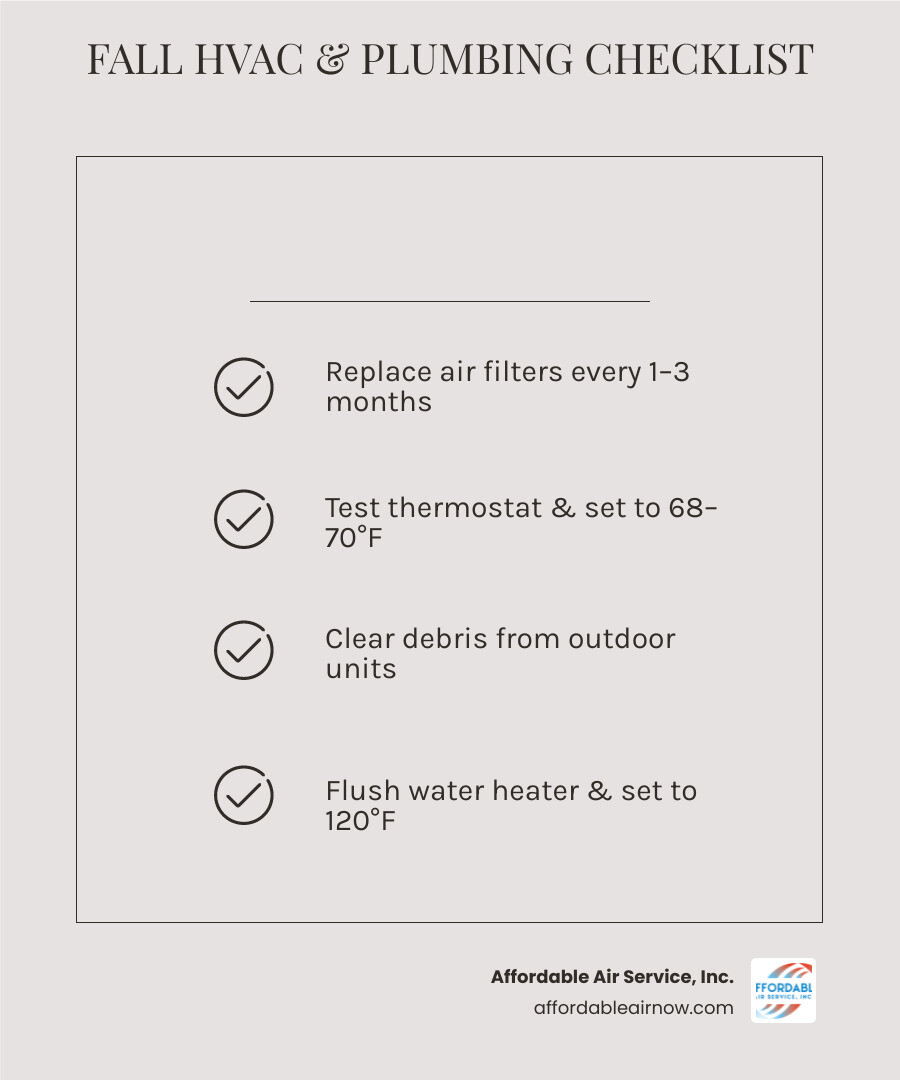
A fall hvac and plumbing maintenance checklist is the single best tool you have to protect your home systems before cold weather hits. Here’s a quick overview of the essential tasks:
Fall HVAC and Plumbing Maintenance Checklist:
- Replace air filters (every 1–3 months)
- Test your thermostat and set it to 68–70°F for occupied hours
- Clear debris from around outdoor HVAC units (2-foot clearance)
- Schedule a professional furnace or heat pump tune-up
- Inspect and seal ductwork for leaks
- Insulate exposed pipes and drain outdoor hoses and faucets
- Flush your water heater and set it to 120°F
- Test your sump pump
- Test smoke and carbon monoxide detectors and replace batteries
- Clean gutters and seal drafts around windows and doors
Most homeowners don’t think about their heating system until the first cold night — and that’s exactly when problems show up. A furnace that sat idle all summer can hide dirty burners, worn parts, or a cracked heat exchanger. Exposed pipes in unheated spaces are one cold snap away from freezing and bursting.
The good news? A little attention in fall goes a long way. HVAC systems that get regular maintenance can last 12–15 years or more. Skipping it means more breakdowns, higher energy bills, and shorter system life.
This checklist covers everything you need to do now — before winter arrives on the Emerald Coast.
Essential Fall HVAC and Plumbing Maintenance Checklist for Homeowners
As we move through April 2026, many homeowners in Santa Rosa Beach and Destin are enjoying the tail end of the mild season, but the shift toward winter weather is inevitable. Taking a proactive approach now ensures that when the temperature drops, your home remains a sanctuary of warmth rather than a source of stress.
Preventative care is about more than just avoiding a breakdown; it’s about protecting one of your biggest investments. Why Regular HVAC Service is Essential cannot be overstated. When a system is neglected, it has to work harder to achieve the same results, which leads to premature wear and tear. By following a consistent fall hvac and plumbing maintenance checklist, you can significantly extend the lifespan of your home’s most critical components.
To give you an idea of what to expect from your home systems, here is a breakdown of average lifespans when proper maintenance is performed:
| System Component | Average Lifespan (with Maintenance) |
|---|---|
| Central Air Conditioner | 10–12 Years |
| Furnace (Gas or Electric) | 10–12 Years |
| Heat Pump | 10–12 Years |
| Tank Water Heater | ~10 Years |
| Tankless Water Heater | 20+ Years |
| Sump Pump | 5–7 Years |
| Garbage Disposal | 8–15 Years |
DIY Steps for Your Fall HVAC and Plumbing Maintenance Checklist
While some tasks require the steady hand of a professional, there are plenty of high-impact steps you can take yourself. These Preventative HVAC Maintenance Tips are designed to keep your system breathing easily.
- The Air Filter Rule: This is the simplest yet most vital task. Air filters should be replaced every 1 to 3 months. If you have pets or family members with allergies, lean toward the 1-month mark. A clogged filter restricts airflow, which is the leading cause of system overheating and eventual motor failure.
- Thermostat Calibration: Test your thermostat by switching it to the “Heat” setting and raising the temperature a few degrees above the current room temperature. Listen for the system to kick on smoothly. For the best balance of comfort and savings, the Department of Energy suggests setting your thermostat to 68–70°F when you are home and awake, and lowering it while you sleep or are away.
- Outdoor Unit Clearance: Your outdoor condensing unit needs room to “breathe.” During the fall, leaves, pine needles, and brush can accumulate quickly. Ensure there is at least a 2-foot clear radius around the unit. This prevents debris from being sucked into the fins, which can restrict heat transfer and force the compressor to work overtime.
- Vent Inspection: Walk through your home and ensure that all supply and return vents are unobstructed. Furniture, rugs, or heavy curtains blocking these vents can cause pressure imbalances in your ductwork, leading to inefficient heating and “hot and cold” spots throughout the house.
Professional Tasks in a Fall HVAC and Plumbing Maintenance Checklist
Even the most diligent DIYer can’t see what’s happening inside a heat exchanger or an electrical control board. That’s where a professional tune-up comes in. Understanding the HVAC Service Process helps homeowners see the value in these annual visits.
A professional fall inspection includes:
- Heat Exchanger Inspection: We check for hairline cracks. Even a tiny crack can allow carbon monoxide to leak into your home’s air supply—a major safety hazard.
- Electrical Connections: Over time, the vibrations of the system can loosen wires. We tighten all connections and measure voltage and current on motors to ensure they are operating within manufacturer specifications.
- Moving Parts Lubrication: Friction is the enemy of efficiency. We lubricate all moving parts to reduce resistance and prevent the motor from drawing too much power.
- Safety Control Testing: We verify that all safety limit switches and sensors are functioning. If the system detects a problem (like a blocked flue), these controls are designed to shut the unit down safely.
Plumbing Winterization: Preventing Frozen Pipes and Water Damage
While we live in a beautiful coastal climate, we aren’t immune to freezing temperatures. On the Emerald Coast, many homes are built on piers or have plumbing exposed in crawlspaces, making them particularly vulnerable to a sudden freeze.
Essential Seasonal Plumbing Tips for Your Vacation Home are especially important if you leave your property for weeks at a time during the winter. A single burst pipe can cause thousands of dollars in water damage in just a few hours.
- Insulate Exposed Pipes: Any pipes located in unheated areas—such as attics, crawlspaces, or garages—should be wrapped in foam pipe insulation. For areas prone to deeper freezes, consider using UL-rated heat tape, which provides a small amount of warmth to keep the water above freezing.
- Outdoor Spigots and Hoses: This is a classic fall task. Disconnect all garden hoses, drain them, and store them for the winter. If your home has interior shut-off valves for outdoor spigots, turn them off and drain the remaining water from the line. Leaving a hose attached can trap water in the pipe, which then expands as it freezes, bursting the pipe inside your wall.
- Sump Pump Testing: With the rainy season often following the fall, your sump pump needs to be ready. Pour a bucket of water into the pit to ensure the float switch activates and the pump effectively clears the water. Check the discharge line for any blockages like leaves or dirt.
By utilizing Plumbing Services to Prevent Problems, you can rest easy knowing your home is shielded from the most common winter plumbing disasters.
Optimizing Your Water Heater and Ductwork for the 2026 Season
Your water heater works significantly harder in the winter because the “incoming” water from the ground is much colder. This means the heating elements or burners have to run longer to reach your desired temperature.
- The Sediment Flush: Over the year, minerals and sediment settle at the bottom of your water heater tank. This sediment acts as an insulator, making it harder for the burner to heat the water. Flushing the tank once a year removes this “gunk,” improving efficiency and preventing the bottom of the tank from rusting out.
- Temperature Settings: Check your water heater’s thermostat. We recommend setting it to 120°F. This is hot enough for comfortable showers and effective dishwashing, but low enough to prevent accidental scalding and save on energy costs.
- Ductwork and Vents: Did you know that leaky ducts can lose up to 30% of your conditioned air before it even reaches your rooms? Fall is the perfect time to inspect visible ductwork in the attic or crawlspace. Look for disconnected sections or holes. Using professional-grade foil tape (not standard duct tape!) can seal these leaks and keep your bills low.
If you notice your hot water isn’t lasting as long as it used to, or if you hear “popping” sounds coming from the tank, these are Home Water Heater Check-Up Signs that shouldn’t be ignored. Whether you need Electric Water Heater Maintenance Tips or a professional flush, taking care of it now prevents a cold shower in December.
Critical Safety Checks and Home Winterization Steps
Maintenance isn’t just about comfort; it’s about safety. As we seal our homes up to keep the heat in, we also trap whatever is inside.
- Carbon Monoxide and Smoke Detectors: Since furnaces and water heaters often use gas or oil, carbon monoxide (CO) is a potential risk. Known as the “silent killer,” CO is odorless and invisible. Test your detectors monthly, and use the fall transition as your reminder to change the batteries in every unit. You should have a CO detector on every level of the home and near every sleeping area.
- Dryer Vent Cleaning: According to the NFPA, clogged dryer vents are a leading cause of house fires. Over the summer, lint can build up in the vent line. In the winter, the air is drier, and static electricity is higher, increasing the risk of a fire. Ensure your vent is clear and the outdoor flap opens and closes freely.
- Gutter Cleaning: If your gutters are full of leaves, water can back up under your roofline or overflow near your foundation. In colder snaps, this standing water can freeze, leading to “ice dams” that damage shingles and cause interior leaks.
- Draft Sealing: Use a stick of incense or a damp hand to feel for drafts around windows and doors on a breezy day. Replacing worn weatherstripping or applying a fresh bead of caulk can keep the warmth inside and the cold air out, making your HVAC system’s job much easier.
Recognizing Signs Your System Needs Immediate Attention
Sometimes, despite our best efforts, a system is simply nearing the end of its reliable life. Recognizing the warning signs early can save you from an emergency replacement in the middle of a holiday weekend.
- Unusual Noises: If your furnace starts making banging, screeching, or whistling sounds, it’s often a sign of a failing belt, a loose component, or a motor on its last leg.
- Inconsistent Temperatures: If one room is a sauna while another is an icebox, your system may be struggling to distribute air, or your ductwork may have significant leaks.
- Low Airflow: If the air coming out of your vents feels weak, it could be a sign of a failing blower motor or a severely clogged internal coil.
- Bill Spikes: A sudden, unexplained jump in your utility bill usually means your system is losing efficiency. This is often the first sign that a component is failing and forcing the rest of the system to compensate.
If your unit is more than 10 years old and requires frequent repairs, it may be time to Extend the Life of Your Air Conditioner by considering a high-efficiency upgrade. Newer systems, like those from Daikin, offer significantly better energy ratings and more reliable performance.
Frequently Asked Questions about Fall Maintenance
How often should air filters be changed during the heating season?
During the heating season, you should check your air filter every 30 days. Most standard 1-inch filters need to be replaced every 1 to 3 months. If you use your heater daily, or if you have pets that shed, you will likely need to change it every month to maintain optimal airflow and indoor air quality.
What is the ideal humidity level for a home in winter?
The ideal indoor humidity level during the winter is between 30% and 40%. If the humidity is too low (below 30%), the air will feel colder, and you may experience dry skin, sore throats, and static electricity. If it’s too high (above 50%), you risk moisture buildup on windows and potential mold growth.
When should I consider replacing my old HVAC or water heater?
For HVAC systems (furnaces, heat pumps, and A/C units), consider replacement if the unit is over 12–15 years old and repair costs are mounting. A good rule of thumb is the “5,000 Rule”: multiply the age of the unit by the repair cost. If the total is more than $5,000, replacement is usually the smarter financial move. For water heaters, if the tank is over 10 years old and showing signs of rust or leaking, it’s best to replace it before it fails and floods your home.
Conclusion
Completing a fall hvac and plumbing maintenance checklist is the best way to ensure your home remains comfortable and safe throughout the winter of 2026. From simple DIY tasks like changing your air filters to professional inspections that catch hidden safety risks, every step you take now pays off in lower bills and fewer headaches later.
At Affordable Air Service, Inc., we are proud to serve our neighbors across Santa Rosa Beach, DeFuniak Springs, Ft Walton Beach, Okaloosa Island, Miramar Beach, Destin, and Freeport, FL. We stand behind our work with the Daikin Comfort Promise, ensuring you receive the highest quality service at a price you can afford.
Whether you need a quick furnace tune-up, a water heater flush, or help winterizing your plumbing, our team is here for you 7 days a week. Don’t wait for the first freeze to find out your system isn’t up to the task.
Schedule your professional fall maintenance today and breathe easy knowing your home is ready for whatever the season brings!