


How a Heat Pump Works — and Why It Matters for Your Home
How does a heat pump work? Here’s the short answer:
- A heat pump moves heat from one place to another using electricity and refrigerant — it does not burn fuel to create heat.
- In summer, it pulls heat out of your home and releases it outside, cooling your living space.
- In winter, it extracts heat energy from outdoor air and moves it inside to warm your home.
- One system handles both heating and cooling year-round.
- Because it moves heat rather than generating it, a heat pump can deliver up to 4 units of thermal energy for every 1 unit of electricity it uses.
That’s the core idea. But if you want to understand why that matters for your comfort and energy bills on Florida’s Emerald Coast, it helps to know a little more about what’s happening inside the system.
Heat pumps have been around since the 1850s and have been used in homes since the 1960s. Today, they are the most common heating and cooling system in Florida — and for good reason. The mild winters and hot summers along the 30A corridor make heat pumps a natural fit. Unlike a furnace that burns gas or oil, a heat pump simply redirects heat that already exists in the air around you. That single shift in approach is what makes these systems so efficient.
In the sections below, we’ll walk through exactly how the process works, what the key components do, and what types of heat pumps are available for homes like yours.
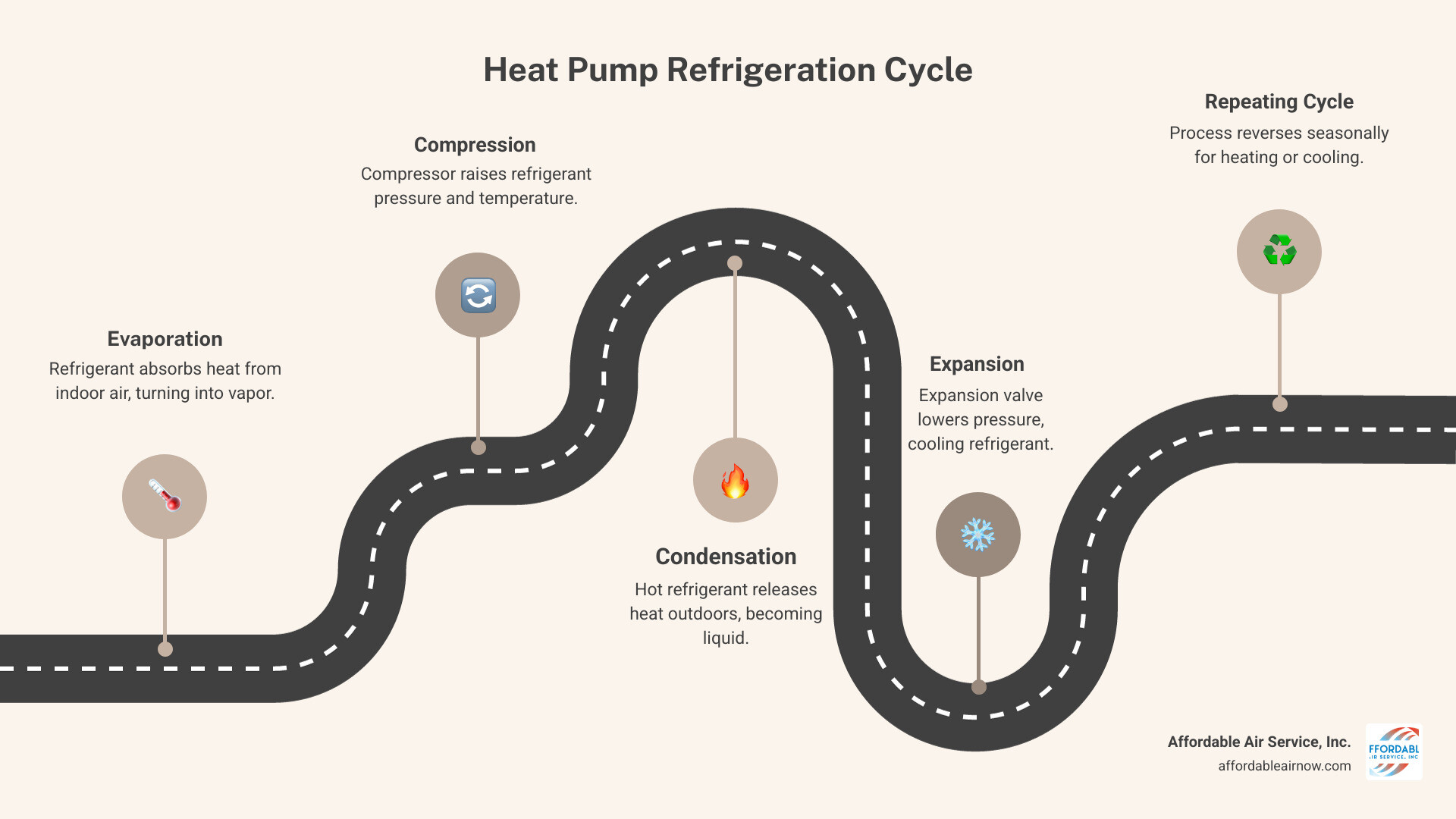
Simple guide to how does a heat pump work terms:
What is a Heat Pump and How Does a Heat Pump Work?
To understand how a heat pump manages to keep your home perfectly comfortable in the dead of July and the chill of January, we have to look at the physics of heat transfer. Heat naturally wants to move from a place of higher temperature to a place of lower temperature. A heat pump uses a small amount of mechanical energy to force this process to run in reverse.
Think of a heat pump like a refrigerator. A fridge doesn’t actually “create” cold; instead, it extracts the heat from inside the food compartment and throws it out into your kitchen (which is why the back of your fridge feels warm). A heat pump does the exact same thing, just on a much larger scale, and with the ability to reverse the direction of the heat flow.
The magic behind this process is the vapor-compression cycle. This cycle relies on a specialized chemical compound called refrigerant, which has an incredibly low boiling point. By manipulating the pressure of this refrigerant, we can force it to absorb heat in one location and release it in another.

When we compare this to traditional heating systems, the efficiency difference is staggering. Traditional gas or electric resistance furnaces must burn fuel or use massive amounts of electricity to create heat from scratch. This means they can never achieve more than 100% efficiency (in fact, even the best gas furnaces max out around 98% efficiency).
A heat pump, however, is simply relocating existing heat. Because it is only paying to move heat rather than create it, it can achieve efficiencies of 300% to 400%. For a deeper dive into these terms, check out our Glossary: Heat Pump.
To make this thermodynamic magic happen, several key components must work together in perfect harmony:
- The Compressor: Often called the heart of the system. It squeezes the refrigerant gas, raising both its pressure and its temperature.
- The Reversing Valve: The brain of the operation. This valve physically changes the direction of the refrigerant flow, allowing the system to switch from cooling mode to heating mode.
- The Expansion Valve: This component acts as a tiny doorway. It allows the high-pressure liquid refrigerant to expand rapidly into a low-pressure liquid-gas mixture, which causes its temperature to plummet instantly.
- The Evaporator Coil: The indoor coil during summer. It allows the cold refrigerant to absorb heat from your indoor air.
- The Condenser Coil: The outdoor coil during summer. It allows the hot refrigerant to release its absorbed heat into the outdoor air.
- The Refrigerant: The lifeblood of the system. This chemical fluid continuously circulates through the tubing, changing states from liquid to gas and back again to transport heat.
By understanding these components, you can see why so many homeowners are choosing to ditch their old-school combustion systems. You can read more about this in our Ultimate Guide to Heat Pump Advantages Over Traditional HVAC.
Seasonal Operation: Heating and Cooling Modes
The defining feature of a heat pump is its versatility. Thanks to the reversing valve, the exact same equipment that keeps you cool during a humid Destin August will keep you cozy during a breezy Miramar Beach January. Let’s break down exactly what happens inside the system during each season.
How does a heat pump work in the summer?
When the Florida sun is beating down on Santa Rosa Beach, your heat pump acts exactly like a standard central air conditioner.
- Heat Absorption: Warm air from inside your home is pulled through your return vents and blown across the indoor evaporator coil. Inside this coil, cold, low-pressure liquid refrigerant is circulating. Because the indoor air is warmer than the refrigerant, the refrigerant absorbs the heat from the air.
- State Change: As the refrigerant absorbs this heat, it boils and evaporates, turning into a low-pressure gas.
- Compression: This gas travels outdoors to the compressor. The compressor squeezes the gas, packing the heat molecules tightly together. This raises the temperature of the gas significantly, making it hotter than the outdoor air.
- Heat Rejection: The hot gas enters the outdoor condenser coil. A large fan blows outdoor air across this coil. Because the refrigerant is hotter than the outside air, the heat naturally transfers from the refrigerant to the outdoor air.
- Expansion: As the refrigerant loses heat, it condenses back into a high-pressure liquid. It then passes through the expansion valve, where its pressure and temperature drop rapidly, turning it back into a cold, low-pressure liquid. The cycle repeats.
During this process, moisture from your indoor air also condenses on the cold indoor coil, helping to dehumidify your home—a massive benefit in our humid coastal climate. For more local insights, take a look at The Emerald Coast Guide to Heat Pump Efficiency and Benefits.
How does a heat pump work in the winter?
When cooler weather rolls in and temperatures drop, you don’t need a separate furnace. You simply adjust your thermostat, and the reversing valve slides into its heating position. This reverses the flow of the refrigerant, turning the outdoor coil into the evaporator and the indoor coil into the condenser.
- Outdoor Heat Extraction: Even when it feels cold outside in Fort Walton Beach, there is still a significant amount of thermal energy present in the outdoor air. In fact, air at 32°F still contains about 85% of the heat energy it does at 70°F. The freezing-cold liquid refrigerant circulates through the outdoor coil. Because the refrigerant is colder than the outdoor air, heat transfers from the outdoor air into the refrigerant.
- Compression: The refrigerant evaporates into a gas and travels to the compressor, which squeezes it into a hot, high-pressure gas.
- Indoor Heat Release: This hot gas is sent indoors to the indoor coil. Your home’s blower fan pushes cool indoor air across the hot coil. The heat transfers from the coil to your air, warming your home.
- The Defrost Cycle: Because the outdoor coil gets incredibly cold during winter operation, moisture in the outdoor air can freeze on the metal fins. To prevent ice buildup from blocking airflow, the heat pump will occasionally run a brief defrost cycle. It temporarily switches back into cooling mode to send hot gas to the outdoor coil to melt the frost, while utilizing temporary backup heat strips indoors so you don’t feel a cold draft.
This elegant process allows you to maintain year-round comfort without ever needing to burn fossil fuels. To see why this is such a popular choice locally, read our guide on Why You Should Consider Heat Pump Installation in Ft. Walton Beach FL.
Types of Heat Pumps and Their Applications
Not every home along the Emerald Coast is built the same way. A historic cottage in DeFuniak Springs has very different heating and cooling needs than a modern, multi-story vacation rental in Inlet Beach. Fortunately, there are several types of heat pumps designed to fit different architectural styles and structural layouts.
When selecting a heat pump, you will encounter three main categories based on where they extract heat:
- Air-Source Heat Pumps: These are the most common systems. They extract heat from the outdoor air and transfer it indoors (or vice versa). They are highly cost-effective, easy to install, and perfectly suited to the mild winters of Northwest Florida.
- Ground-Source (Geothermal) Heat Pumps: These systems extract heat from the earth. Because ground temperatures a few feet below the surface remain constant year-round (usually around 55°F to 70°F depending on the region), geothermal systems are incredibly efficient. However, they require extensive excavation to bury a loop of pipes, making them more complex to install, especially in sandy coastal areas.
- Water-Source Heat Pumps: Similar to geothermal, these systems extract heat from a nearby body of water (like a lake, pond, or well).
In addition to these heat sources, you also have choices in how the air is distributed inside your home. Ductless mini-splits have exploded in popularity because they allow you to heat and cool individual rooms without any ductwork. A small outdoor unit connects to one or more elegant, wall-mounted indoor blowers, giving you precise zone control.
To help you compare your options, here is a breakdown of the three most common configurations we install in the Santa Rosa Beach and Destin areas:
| System Type | Primary Heat Source | Distribution Method | Best Suited For | Key Efficiency Metrics |
|---|---|---|---|---|
| Ducted Air-Source | Outdoor Air | Existing Ductwork | Whole-home replacement of traditional central AC and furnace systems. | High SEER2 (cooling) and HSPF2 (heating) ratings. |
| Ductless Mini-Split | Outdoor Air | Individual Wall/Ceiling Units | Zoned comfort, historic homes without ducts, room additions, or sunrooms. | Outstanding zonal efficiency; high COP. |
| Geothermal (Ground-Source) | Ground/Earth | Ducted or Hydronic | New construction with ample yard space looking for maximum lifetime efficiency. | Exceptional COP (often 4.0 to 6.0). |
Whether you need a traditional ducted system or a modern multi-zone setup, professional sizing and layout design are critical to getting the performance you expect. You can learn more about local options by visiting our page on HVAC Santa Rosa Beach FL Heat Pump Installation.
Frequently Asked Questions About Heat Pumps
As local HVAC experts serving communities from Niceville to Rosemary Beach, we hear a lot of questions about heat pump technology. Here are the facts behind the most common inquiries we receive.
Do heat pumps work in extremely cold weather?
Yes, they absolutely do. There is a common misconception that heat pumps stop working when the temperature drops below freezing. While it is true that older models struggled in extreme cold, modern technology has completely changed the game.
Today’s cold-climate heat pumps feature variable-speed inverter compressors and advanced refrigerants with lower boiling points. These systems can operate highly efficiently at temperatures as low as -22°F (-30°C).
In Florida’s panhandle, our winter temperatures rarely drop below freezing, meaning a standard heat pump will operate in its peak efficiency zone almost 100% of the time. On the rare nights when temperatures do plummet, modern systems utilize auxiliary electric heat strips (backup heating) to ensure your home stays perfectly warm.
What is the typical lifespan of a heat pump?
In a standard environment, a high-quality heat pump can easily last 15 years with proper care. However, living on the Emerald Coast introduces unique environmental factors.
Our proximity to the Gulf of Mexico means our outdoor units are constantly exposed to salt air, high humidity, and blowing sand. Salt spray can accelerate the corrosion of the delicate aluminum fins on your outdoor coil.
In coastal cities like Destin and Santa Rosa Beach, a heat pump typically has a lifespan of 10 to 15 years. You can maximize this lifespan by choosing a system with specialized corrosion-resistant coil coatings (such as those found on Daikin Fit systems) and keeping up with regular preventative maintenance. For a complete local guide on protecting your system, read our Keep It Running: The Santa Rosa Beach Guide to Heat Pump Installation and Maintenance.
Do heat pumps require special maintenance?
While heat pumps are incredibly reliable, they work hard all year long. Unlike a furnace that sits idle all summer, or an AC that sleeps all winter, your heat pump is a year-round workhorse. Because of this constant operation, regular maintenance is absolutely vital.
Basic tasks you can handle yourself include:
- Changing your indoor air filters every 1 to 3 months.
- Keeping the outdoor unit clear of weeds, leaves, sand, and debris to ensure proper airflow.
However, professional maintenance is required at least twice a year (once before the cooling season and once before the heating season). A professional technician will wash the coils to remove salt buildup, check refrigerant charge levels, inspect electrical connections, and clear the condensate drain lines to prevent water damage. To learn more about when to call in the pros, check out our article on Heat Pump Needs Professional Attention.
Conclusion
Understanding how does a heat pump work reveals why this technology is the ultimate comfort solution for Northwest Florida homeowners. By shifting heat instead of creating it, heat pumps deliver unmatched energy efficiency, lower monthly utility bills, and consistent, year-round comfort in one sleek package.
At Affordable Air Service, we are proud to be the Emerald Coast’s trusted partner for high-efficiency comfort. As a local, family-owned business, we understand the unique demands that our coastal climate puts on heating and cooling equipment. That is why we specialize in advanced systems like the Daikin Fit, which offers whisper-quiet operation, compact footprints perfect for tight coastal lots, and outstanding corrosion protection backed by the Daikin Worry-Free 12-Year Warranty.
We believe that home comfort should be accessible to everyone. That is why we offer:
- 7-Day Service: We are here when you need us most, seven days a week.
- System Consultations: We help you plan your system upgrade with clear, personalized options.
- Easy Financing: Flexible payment solutions through our trusted GoodLeap partnership.
- Daikin Comfort Promise: Our commitment to getting the job done right, every single time.
Whether you are looking to upgrade an aging, inefficient system in Miramar Beach, install a ductless mini-split in a DeFuniak Springs historic home, or schedule routine maintenance in Freeport, our experienced team is ready to help.
Read more about the Professional Heat Pump Installation Benefits or explore our full range of heating, cooling, and plumbing services by visiting our Affordable Air Service Services Page. Ready to experience the difference that a high-efficiency heat pump can make in your home? Contact our team today to schedule your consultation!