


The Hidden Mold Risk Inside Your AC — and How Maintenance Stops It
Understanding how proper AC maintenance prevents mold growth is one of the most important things you can do as a Florida homeowner. Your air conditioner runs hard in the heat and humidity of the Emerald Coast — and that constant work creates exactly the conditions mold needs to thrive: moisture, warmth, darkness, and dust.
Quick answer: How proper AC maintenance prevents mold growth
- Removes moisture — Regular cleaning keeps condensate drains and drain pans clear, so water doesn’t pool inside your system.
- Improves airflow — Clean filters and coils let air move freely, reducing humidity buildup in ducts and vents.
- Eliminates food sources — Cleaning dust and debris off coils and filters removes the organic material mold feeds on.
- Catches problems early — Routine tune-ups catch clogged drains, leaky ducts, and frozen coils before mold gets a foothold.
- Controls indoor humidity — A well-maintained AC dehumidifies air properly, keeping indoor humidity in the safe 30–50% range.
Mold spores are always in the air around us — they’re invisible and unavoidable. The only thing stopping them from taking hold inside your home is keeping the environment dry, clean, and well-ventilated. When your AC system is neglected, it can quietly become one of the biggest sources of mold in your home, circulating spores through every room every time it runs.
According to the EPA, indoor air pollution can be two to five times worse than outdoor air — and a poorly maintained HVAC system is a major reason why. On Florida’s Emerald Coast, where summer humidity regularly pushes above 60%, the stakes are even higher.
The good news? Most of this is completely preventable with the right maintenance habits.
Why AC Systems Become Mold Hotspots in Florida Homes
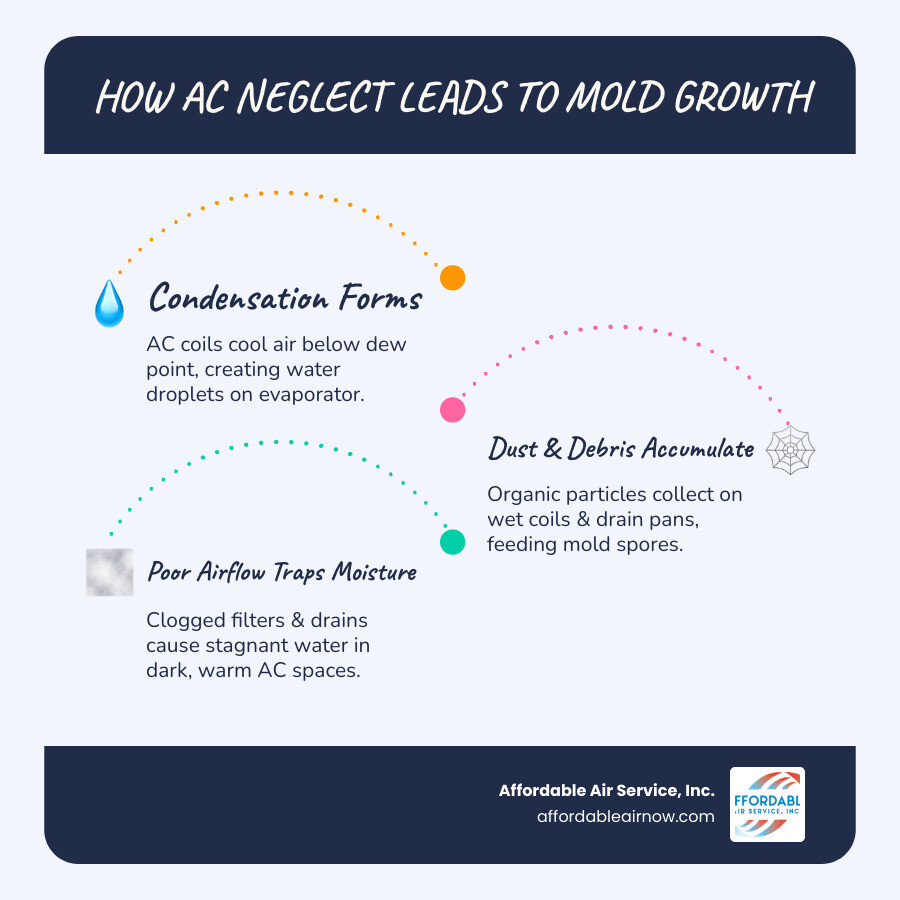
In our neck of the woods—from the white sands of Destin to the quiet bayous of Freeport—the air is thick with moisture. While we love the coastal breeze, that same humidity makes our homes vulnerable. An air conditioner is essentially a giant dehumidifier. As it cools your home, it pulls gallons of water out of the air. If that water doesn’t have a clear path out of the house, it stays inside the dark, cool cabinets of your HVAC unit. This is precisely where the trouble begins.
Why do AC and HVAC systems become breeding grounds for mold?
Mold is a “sneaky little bugger,” as some of our technicians like to say. It only needs four things to grow: moisture, oxygen, a food source (like dust or organic debris), and a hospitable temperature. Your AC system provides all four in spades.
When your system pulls in air, it also pulls in microscopic dust, skin cells, and pet dander. These settle on the damp surfaces of your evaporator coils and inside your dark ductwork. When you combine this organic “food” with the constant condensation produced during the cooling cycle, you’ve essentially built a five-star resort for mold spores.
How clogged drain pans, dirty filters, and evaporator coils create mold-friendly conditions
Every component of your AC plays a role in moisture management. When one part fails, the whole system becomes a mold factory.
- Evaporator Coils: These are the heart of the cooling process. As warm air passes over the cold coils, moisture condenses on them. If the coils are dirty, that moisture gets trapped in the layer of grime, creating a perfect petri dish.
- Drain Pans: Below the coils sits a pan designed to catch the dripping condensation. If the pan is rusted, misaligned, or clogged with “biofilm” (that slimy gunk that grows in standing water), the water pools instead of draining.
- Dirty Filters: A clogged filter restricts airflow. When air can’t move fast enough, the evaporator coils can actually freeze. When they eventually thaw, they release a massive amount of moisture all at once, often overwhelming the drain pan and soaking the surrounding area.
To keep your system running smoothly and safely, prevent ac drain line overflow before it leads to a damp, moldy mess.
Why coastal humidity and poor system sizing make mold problems worse
In places like Miramar Beach and Santa Rosa Beach, we face a unique challenge: relative humidity that frequently stays above 60%. Mold flourishes the moment humidity crosses that 60% threshold.
Furthermore, many homes in our area suffer from “oversized” AC units. You might think a bigger unit is better, but an oversized system cools the home so quickly that it “short cycles.” It turns off before it has a chance to actually remove the humidity from the air. This leaves your home feeling cool but “clammy,” which is a major red flag for mold growth.
Leaky ducts in your attic or crawlspace can also pull in humid, salty air, causing hidden condensation to form inside the walls. This is why understanding how your homes systems fight the coastal humidity war is so important for local property owners.
How Proper AC Maintenance Prevents Mold Growth
The best defense is a good offense. Maintenance isn’t just about preventing a breakdown in the middle of a July heatwave; it’s about controlling the environment inside your home.
The moisture-control science behind how proper AC maintenance prevents mold growth
The refrigeration cycle is a delicate balance. When your system is tuned up, the coils are at the perfect temperature to pull moisture from the air efficiently. Proper maintenance ensures that the “dew point” is managed correctly within the unit. By keeping the drainage system clear and the airflow high, we ensure that moisture is captured and expelled from your home before mold spores have a chance to settle and germinate.
How proper AC maintenance prevents mold growth through clean coils, filters, and drains
When we perform a professional tune-up, we aren’t just looking at the electrical bits. We are performing deep hygiene for your home’s “lungs.”
- Coil Sanitization: We clean the evaporator coils to remove the dust and biofilm that act as mold food.
- Drain Flushing: We clear the condensate lines to ensure water flows freely to the outdoors.
- Filter Optimization: We ensure you are using the right MERV-rated filter for your system—one that catches spores without suffocating your blower motor.
- Airflow Balancing: We check that your vents are clear and your ductwork is sealed, preventing humid attic air from entering the system.
Following these preventative hvac maintenance tips is a vital way to protect your family’s health and your property value.
How often to schedule maintenance for mold prevention
In Florida, we recommend a “twice-a-year” approach. A spring tune-up prepares your system for the heavy dehumidification load of summer, while a fall inspection ensures that the dampness from the rainy season hasn’t left any lingering issues. For vacation rentals in Destin or Okaloosa Island that see high occupancy and constant door-opening, this schedule is even more critical. Getting a pre-summer ac maintenance to prevent total meltdowns can save you from a major remediation project later.
The Homeowner’s DIY Checklist to Reduce Mold Risk
While professional service is essential, there are things you can do every month to keep your air clean.
Filter changes, vent cleaning, and drain line checks you can do yourself
- Change Filters Every 30-90 Days: This is the #1 thing you can do. If you have pets or allergies, aim for every 30 days.
- Wipe Down Vents: If you see dust building up on your supply vents, wipe it off with a damp cloth. Dust is food for mold.
- Check the Drip Tray: If you have a visible indoor unit (like a closet-mounted air handler), peek at the tray. If you see standing water, you have a clog.
- Mini-Split Care: If you use ductless systems, they have filters and drains too. We often see mini-split ac condensate drain clogging because homeowners forget they need maintenance just like central air.
How to monitor indoor humidity and keep it in the ideal range
The ideal indoor humidity for comfort and mold prevention is between 30% and 50%. You can monitor this easily with a tool called a hygrometer, or even through many modern smart thermostats.
If your AC alone isn’t keeping you in that range, you may need to beat the humidity with these smart ways to cool your coastal home, such as using bathroom exhaust fans during showers or running a dedicated dehumidifier during the “shoulder” seasons when it’s humid but not hot enough for the AC to run constantly.
Warning signs homeowners should never ignore
Don’t ignore your senses. Your body often knows there’s a problem before you see it.
- The “Musty” Smell: That “stale gym locker” or “damp basement” smell is often the first sign of mold growth.
- Visible Spots: Look for black, green, or white fuzzy patches around your vents or on the AC cabinet.
- Allergy Flare-ups: If you start sneezing or getting headaches only when you’re at home, your AC might be the culprit.
- Water Leaks: Knowing how to tell if you have clogged drain can help you stop a mold colony before it starts.
When Mold May Already Be in the System
If you suspect mold has already moved in, don’t panic—but do take action. Mold in the HVAC system is serious because the blower fan acts like a seed-spreader, blowing spores into every corner of your home.
The most common signs of mold growth in an air conditioner
| Sign | What it looks like/smells like | Likely Cause |
|---|---|---|
| Musty Odor | Earthy, pungent, or “wet dog” smell | Mold or bacteria on coils or in ducts |
| Visible Spots | Black or green specks on vents | Spores catching on condensation at the register |
| Slime in Pan | Thick, jelly-like substance in the drain | Algae and mold buildup in standing water |
| Damp Vents | Water droplets or “sweating” on registers | High humidity or poor insulation in ducts |
Health risks linked to mold exposure from AC systems
The CDC notes that indoor air can be significantly more polluted than outdoor air. Exposure to mold spores can cause a variety of health issues, including:
- Wheezing and coughing
- Nasal and sinus congestion
- Red, itchy eyes or skin rashes
- Aggravation of asthma or chronic lung disease
- Frequent headaches and fatigue
For vulnerable groups like children, the elderly, or those with compromised immune systems, the risks are even higher. This is why we treat mold prevention as a health service, not just a mechanical one.
What to do if you suspect mold is already present
If you see or smell mold, turn the system off. Running the fan will only spread the spores further. Do not try to scrub the mold away yourself if it’s inside the unit or the ducts; disturbing mold without proper containment can release a massive cloud of spores into your living space.
Check your filters—if they are damp or spotted, replace them immediately. Then, schedule a professional evaluation. We can perform a deep cleaning of the coils and drainage system to remove the growth safely.
Advanced Mold-Prevention Upgrades That Support Your AC
Sometimes, especially in our humid Florida climate, the standard AC setup needs a little extra help to keep things dry and clean.
Which upgrades help most in high-humidity homes?
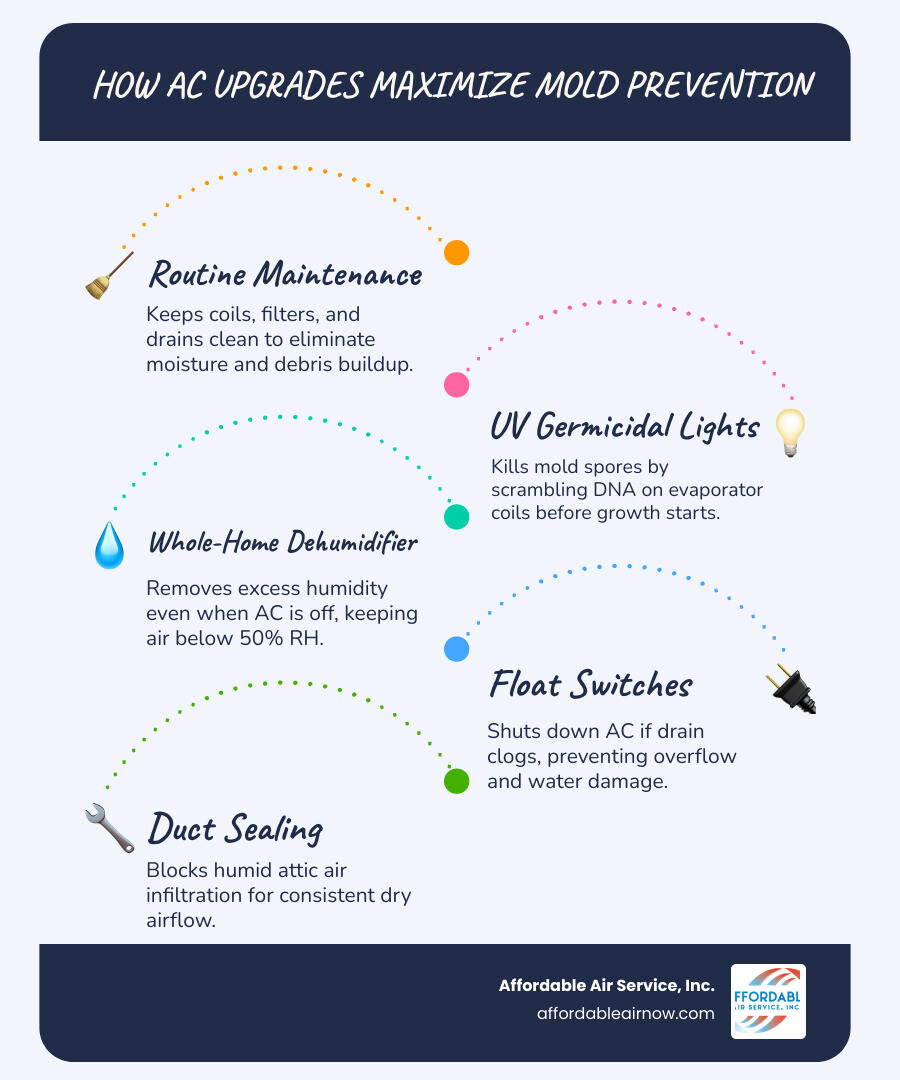
- UV Germicidal Lights: These are installed inside your air handler, right next to the evaporator coil. They emit a specific wavelength of light that scrambles the DNA of mold, bacteria, and viruses, preventing them from ever growing on your coils.
- Whole-Home Dehumidifiers: These work alongside your AC to pull moisture from the air even when the cooling system isn’t running. This is a game-changer for beach homes that are often closed up.
- Float Switches: This is a simple safety device. If your drain line clogs, the float switch detects the rising water and shuts the AC off before it can overflow and cause water damage (and mold).
- Duct Sealing: Sealing leaks ensures that humid air from your attic isn’t being sucked into your clean air stream.
How proper AC maintenance prevents mold growth even more effectively with smart upgrades
When you combine routine maintenance with these upgrades, you create a “layered” defense. The maintenance keeps the system clean, the UV lights kill any spores that land, and the dehumidifier ensures the air never gets damp enough for mold to survive in the first place. This combination is the gold standard for indoor air quality on the Emerald Coast.
When advanced solutions make sense for coastal and high-occupancy properties
If you own a rental property in Santa Rosa Beach or a vacation home in Fort Walton Beach that sits empty for weeks at a time, advanced solutions are a necessity. During the “shoulder” seasons (like May or October), the humidity is high but the temperature is mild. Without a dehumidifier or smart controls, the house can become a “mold bomb” while you’re away.
Frequently Asked Questions About How Proper AC Maintenance Prevents Mold Growth
What is the ideal indoor humidity level to prevent mold?
The sweet spot is between 30% and 50%. Once you hit 60%, mold growth becomes much more likely. We recommend keeping a hygrometer in your home to keep an eye on these levels, especially during the rainy season.
Should AC tune-ups be scheduled once or twice a year for mold prevention?
In our humid climate, twice a year is the best practice. A spring visit focuses on cooling and dehumidification, while a fall visit ensures the system is clean after the grueling summer months. You can find more details in our dont sweat it the ultimate florida ac maintenance schedule.
Can I clean mold from my AC myself?
You can safely clean surface dust from your supply vents with a mild soap and water solution. However, if the mold is inside the air handler, on the coils, or deep in the ducts, you should call a professional. DIY cleaning often misses the root of the problem and can lead to accidental exposure to concentrated spores.
Conclusion
At Affordable Air Service, we know that your home is your sanctuary. Keeping it comfortable means more than just hitting a temperature on the thermostat—it means ensuring the air you breathe is clean, dry, and safe. Understanding how proper AC maintenance prevents mold growth is the first step in protecting your family and your investment.
Whether you’re a year-round resident in DeFuniak Springs or a property manager in Miramar Beach, routine maintenance is a proactive way to avoid the massive headaches of mold remediation. Don’t wait for a musty smell to tell you there’s a problem.
Take control of your home’s health today. We invite you to keep your santa rosa beach home breezy with proper ac maintenance by scheduling a professional tune-up. Our team is here 7 days a week to help you breathe easier.
Ready to protect your home from the Florida humidity? Discover why regular hvac service is essential and check out our full range of services to keep your system in peak condition.