


Your AC Is Trying to Tell You Something — Here’s What Each Noise Means
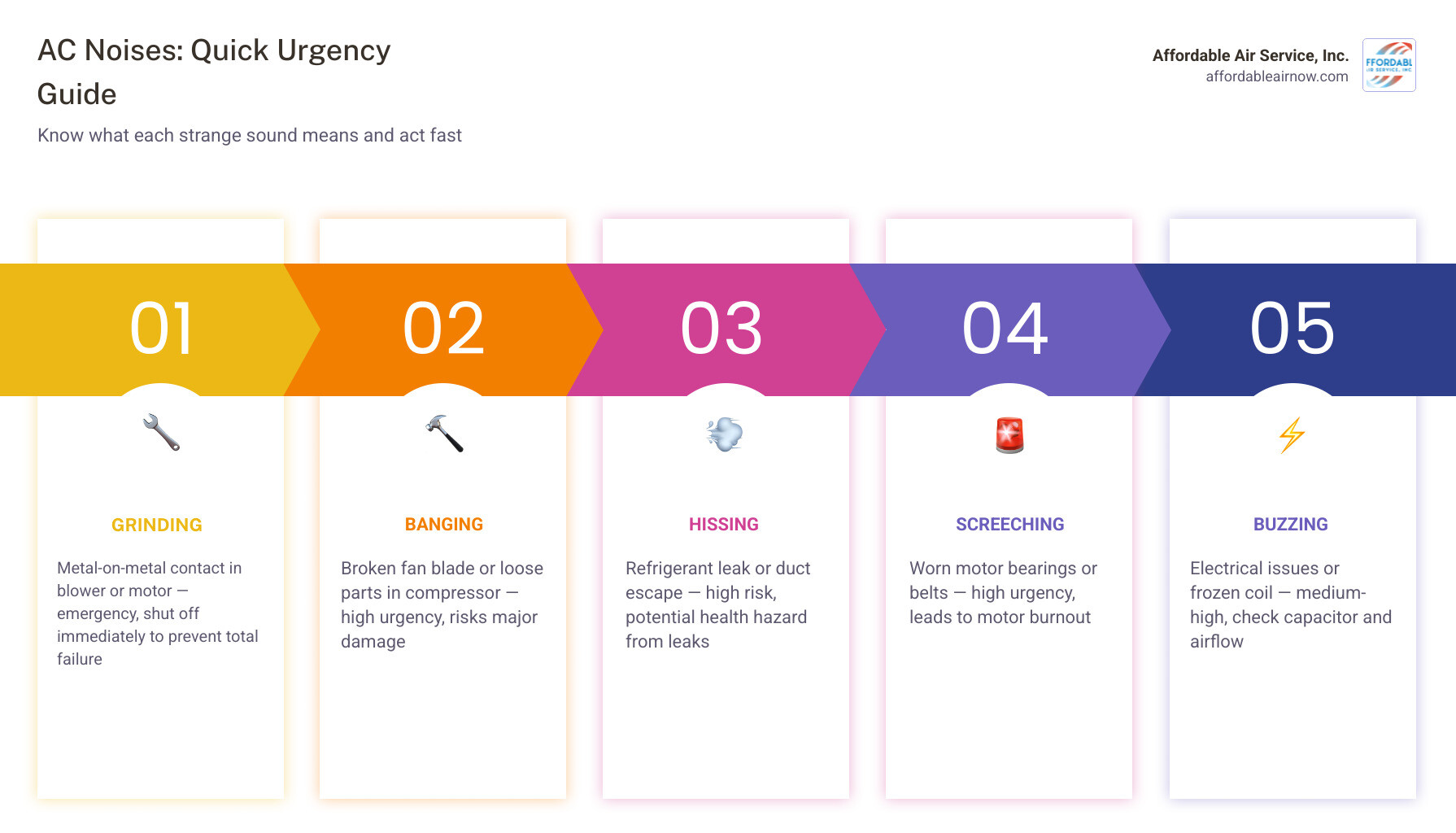
AC making strange noises is your system’s way of sending an early warning before a small problem turns into a costly breakdown. Here’s a quick reference for the most common sounds and what they likely mean:
| Sound | Most Likely Cause | Urgency |
|---|---|---|
| Buzzing / Humming | Electrical issue, frozen coil, failing capacitor | Medium–High |
| Hissing | Refrigerant leak or duct air escape | High |
| Gurgling / Bubbling | Clogged condensate drain or refrigerant issue | Medium |
| Rattling | Loose screws, debris, or panel vibration | Medium |
| Banging | Broken fan blade or loose internal part | High |
| Clicking (repeated) | Failing relay, contactor, or thermostat | Medium–High |
| Screeching / Squealing | Worn motor bearings or belt wear | High |
| Grinding | Metal-on-metal contact — shut off immediately | Emergency |
| Whistling | Dirty filter, blocked vent, or duct leak | Low–Medium |
Modern air conditioners are engineered to run quietly — often between 25 and 55 decibels, about the level of a soft conversation. Some newer systems run as low as 19 decibels, quieter than a library. So when your unit suddenly sounds like it’s warming up for a concert, something is off.
The good news: not every strange sound means disaster. Some noises are minor. Others — like grinding, loud banging, or a persistent hiss — mean you should turn the system off right now and call a professional.
This guide walks you through exactly what they mean, how urgent each one is, and what to do next — whether that’s a simple filter swap or an emergency service call here on the Emerald Coast.
AC Making Strange Noises What They Mean: The 9 Sounds Homeowners Should Know
In May 2026, air conditioning technology has advanced to the point where your unit should be a silent partner in your home comfort. Whether you have a central AC system, a window unit, or a ductless mini-split, new sounds are a red flag. Identifying ac making strange noises what they mean is the first step toward protecting your investment.
While some sounds are common across all systems, the urgency varies. A light rattle might just be a loose screw, while a grinding sound is a mechanical emergency. We always recommend safety first: if a noise sounds violent or is accompanied by a burning smell, shut the system down at the thermostat and the breaker immediately.
Buzzing or humming: ac making strange noises what they mean when electricity or airflow is the issue
Buzzing is one of the most frequent sounds we hear about in Santa Rosa Beach. It often points to an electrical struggle. If the outdoor unit is buzzing but the fan isn’t spinning, you likely have a failed capacitor or a faulty contactor. These components are the “batteries” and “switches” that help your motor start and run.
However, buzzing isn’t always electrical. It can also indicate that your unit is freezing over. When airflow is restricted — often due to a filthy air filter or a blocked return vent — the coils can turn into a block of ice. This strain causes the compressor to vibrate and buzz. If you notice this, check your filter first. For more help, you can look into troubleshooting common AC issues.
Hissing or gurgling: ac making strange noises what they mean with refrigerant or drain problems
Hissing is almost never a “wait and see” situation. A persistent hiss usually signals a refrigerant leak. Refrigerant is under high pressure; when it escapes through a tiny hole in the coils or lines, it creates a sound similar to a leaking tire. This is a health risk and an environmental hazard that requires a certified technician to fix.
Gurgling or bubbling, on the other hand, usually involves liquids. This could be air bubbles in the refrigerant line (another sign of a leak) or a clogged condensate drain line. In our humid Florida climate, algae and debris can easily block the PVC drain pipe, causing water to back up and “glug” as air tries to pass through.
Rattling or banging: loose parts, debris, or failing components

If your AC sounds like it’s hosting a drum solo, it’s likely a mechanical issue. Rattling is often the least serious of the two; it usually means a cabinet panel has a loose screw or a small twig has fallen into the outdoor condenser.
Banging is much more urgent. A loud, rhythmic banging usually means a part has come loose inside the compressor or a fan blade is bent and hitting another component. If you hear heavy banging from the outdoor unit, turn it off immediately to prevent the loose part from destroying the entire motor assembly.
Clicking or screeching: electrical faults vs motor and belt wear
A single click when the unit starts or stops is normal. However, repeated AC unit is making a clicking noise usually points to a failing electrical relay or a thermostat that can’t quite communicate with the system.
Screeching or squealing is the “nails on a chalkboard” of the HVAC world. In older systems, this is often a worn-out fan belt. In modern units, it typically means the bearings in your blower motor or condenser fan are failing. This high-pitched sound indicates high friction, which leads to heat and, eventually, a total motor burnout.
Grinding or whistling: when to shut the system down immediately
Grinding is the ultimate warning sign. It almost always means metal-on-metal contact. This occurs when motor bearings have completely failed, allowing the rotating parts to rub against the housing. If you hear grinding, the damage is happening in real-time. Shut the system down to save yourself from a much more expensive replacement.
Whistling is usually an airflow “scream.” It happens when your system is trying to pull in air but can’t. This “tea kettle” effect is often caused by a severely clogged air filter, closed dampers, or even a leak in your ductwork that is sucking air through a tiny crack. You can find more professional AC repair signs to help you decide when to call for backup.
Which AC Sounds Are Normal and How to Tell Where the Noise Is Coming From
Not every sound is a cause for alarm. A healthy AC system makes a few predictable noises:
- A gentle whoosh: The sound of air moving through the vents.
- A single click: The thermostat engaging the cooling cycle.
- A brief hiss: Refrigerant pressure equalizing after the unit shuts off (usually lasts about 15 seconds).
- A soft hum: The sound of the compressor and fan motors running normally.
To figure out if a noise is dangerous, try the fan-only test. Switch your thermostat from “Auto” or “Cool” to just “Fan.” If the noise persists, the issue is likely in your indoor blower motor or ductwork. If the noise stops, the problem is probably with the outdoor compressor or the refrigerant system.
Indoor unit noises vs outdoor unit noises vs ductwork noises
- Indoor Air Handler: Listen for whistling (filters), clicking (electronics), or thumping (blower balance).
- Outdoor Condenser: Watch for banging (fan blades), buzzing (contactor/capacitor), or screeching (motor bearings).
- Ductwork: If you hear “popping” or “clanging,” it’s often the metal ducts expanding and contracting as they change temperature. However, persistent whistling in the walls usually indicates a duct leak.
Differences between home central AC, window units, ductless systems, and car AC noises
While the physics of cooling are the same, the sounds can vary.
- Central AC: Noises often travel through the ducts, making them sound like they are coming from everywhere.
- Window Units: Because the compressor is right in the window, you’ll hear more vibration and humming.
- Ductless Mini-Splits: These are designed to be ultra-quiet (like the Hitachi airHome range at 19dB). Any clicking or gurgling in these is a sign of a clogged drain or a failing sensor.
- Car AC: Rattling often comes from a loose serpentine belt or debris that entered the air intake (like leaves or insects).
What To Do Right Away When Your AC Starts Making a Strange Noise
When you hear your ac making strange noises, your first move should be to protect the equipment.
- Turn off the thermostat: Stop the cooling cycle immediately.
- Check for smells: Do you smell “ozone” or burning plastic? This confirms an electrical issue.
- Record the sound: Use your phone to take a quick video. This helps our technicians at Affordable Air Service diagnose the issue much faster.
- Note the timing: Does it happen only at startup? Only when it’s 95 degrees in Destin?
Safe DIY checks before calling for AC repair
Before you call for a pro, there are a few safe steps you can take:
- Check the Air Filter: A dirty filter is the #1 cause of whistling and buzzing. Replace it if it looks gray or dusty.
- Clear Debris: Ensure there are at least two feet of clearance around your outdoor unit. Remove any leaves, sticks, or grass clippings.
- Tighten Panels: Sometimes a “rattle” is just a loose screw on the access door. If you are comfortable, ensure the cabinet screws are snug.
- Inspect Vents: Make sure furniture or curtains aren’t blocking your return grilles.
- Check the Drain Line: If you hear gurgling, look at the PVC pipe outside. If it’s not dripping water while the AC is running, it might be clogged. You can find more common AC repair issues and solutions here.
Noises that need emergency professional attention
Some sounds are non-negotiable emergencies. If you hear grinding, loud banging, or a high-pitched screaming, do not turn the AC back on. These sounds mean internal components are failing under high pressure or friction. Running the system for even a few more minutes could turn a repairable motor issue into a total system replacement.
Also, if the AC fan is not working but still running, the buzzing you hear is the motor overheating. This is a fire risk and needs immediate attention.
Why Ignoring Strange AC Noises Leads to Bigger Problems
Your AC system is designed to last 15 to 20 years, but that lifespan is based on the assumption that it isn’t running while broken. Ignoring a “small” noise like a squeal or a rattle is the fastest way to ensure a premature failure.
For example, a squealing bearing increases the load on your electrical system, raising your energy bills. Eventually, that bearing will seize, which can burn out the entire motor or damage the compressor. A compressor replacement can be one of the most expensive repairs in the industry. By catching the noise early, you are choosing a simple part replacement over a multi-thousand-dollar overhaul.
How regular maintenance prevents buzzing, rattling, and squealing
The best way to deal with AC noises is to never hear them in the first place. Regular maintenance (ideally in the spring and fall) includes:
- Lubrication: Keeping motors quiet and friction-free.
- Tightening: Ensuring electrical connections and cabinet panels don’t vibrate loose.
- Cleaning: Removing the dirt that causes whistling and the clogs that cause gurgling.
- Testing: Checking capacitors and contactors before they start buzzing.
If you suspect your system is struggling, keep an eye out for AC condenser fan motor failure signs.
How to identify the likely cause: electrical, refrigerant, mechanical, or airflow
By paying attention to the “symptom patterns,” you can often identify the root cause:
- Electrical: Buzzing, rapid clicking, or a burning smell.
- Refrigerant: Hissing, bubbling, or ice buildup on the lines.
- Mechanical: Banging, grinding, screeching, or thumping.
- Airflow: Whistling, “tea kettle” sounds, or the unit shutting off quickly (short cycling).
Frequently Asked Questions About AC Making Strange Noises What They Mean
Is it dangerous to keep running my AC if it is making a loud noise?
Yes, it can be. Depending on the noise, you could be causing permanent damage to the compressor or motor. Screeching, grinding, and hissing are the most dangerous and can lead to motor failure or hazardous refrigerant exposure.
When should I turn off the AC completely?
Turn it off immediately if you hear grinding, loud banging, or persistent hissing. You should also shut it down if you smell smoke or if the unit is “short cycling” (turning on and off every few minutes).
Can I fix a noisy AC unit myself or do I need a technician?
You can handle simple tasks like changing the air filter, clearing leaves from the outdoor unit, or tightening a loose cabinet screw. However, anything involving the refrigerant lines, electrical wiring, or internal motor components requires a professional. Attempting to fix a refrigerant leak yourself is illegal in many areas and highly dangerous.
Conclusion
Your home in Santa Rosa Beach or Destin should be a place of quiet comfort. If your ac making strange noises is disrupting your peace, don’t wait for the system to fail entirely. Whether it’s a minor rattle or an emergency grind, early intervention saves you money and stress.
At Affordable Air Service, we’ve been serving the Emerald Coast for decades. We offer 7-day service, free estimates, and a commitment to keeping your home cool without the “rock band” soundtrack. If your AC is trying to tell you something, we’re here to listen and fix it fast.
For more information on keeping your home systems running smoothly, check out our full list of services.