


Why Understanding How Clogs Form and How to Prevent Them Saves You From Costly Repairs
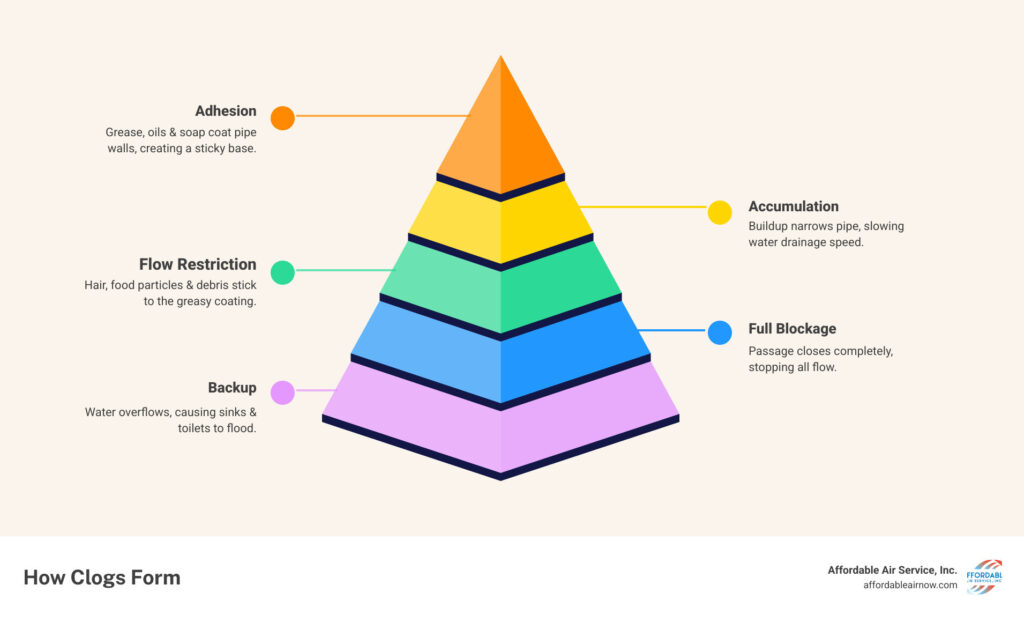
How clogs form and how to prevent them comes down to a simple four-stage process happening silently inside your pipes — and stopping it early is far easier than dealing with a full blockage later.
Here’s the quick answer:
How Clogs Form:
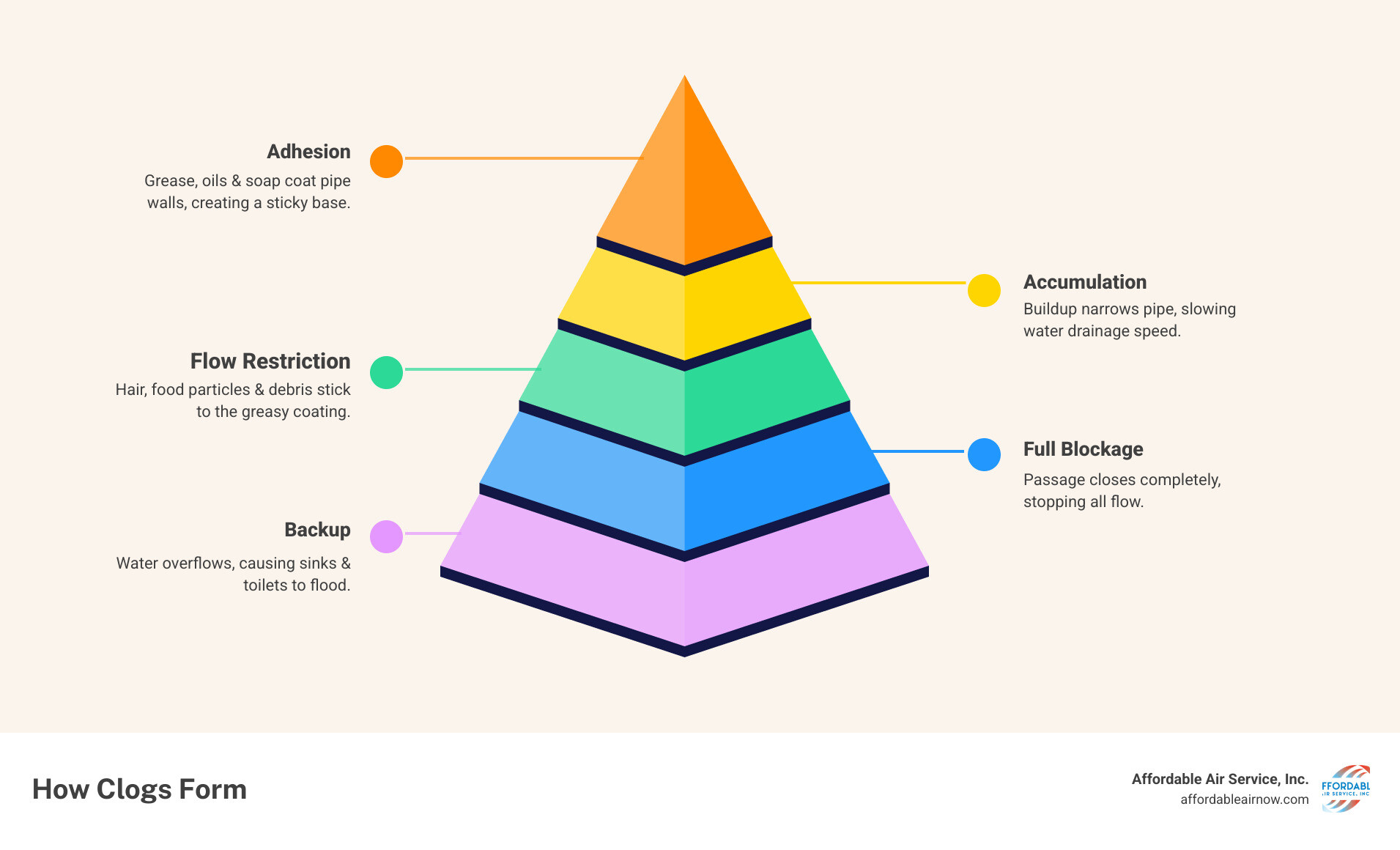
- Adhesion – Grease, oils, and soap coat the inner pipe walls
- Accumulation – Hair, food particles, and debris stick to that coating
- Flow restriction – The buildup narrows the pipe, slowing drainage
- Full blockage – The passage closes completely, stopping flow
How to Prevent Them:
- Never pour fats, oils, or grease down any drain
- Use mesh strainers or hair catchers on every drain opening
- Flush drains with hot water regularly
- Only flush toilet paper — nothing else
- Schedule a professional sewer inspection every two years
Most homeowners don’t think about their drains until water starts backing up. But clogs rarely happen overnight. They build up slowly — a little grease here, a few strands of hair there — until one day your sink won’t drain or your toilet backs up at the worst possible moment.
The good news? Most clogs are completely preventable once you understand what causes them.
The Science of How Clogs Form and How to Prevent Them
To truly master your home’s plumbing, we have to look at what is happening beneath the surface. Many of our neighbors in Santa Rosa Beach and Destin assume that if they pour something down the drain and it disappears, the job is done. Unfortunately, pipes aren’t just “teleporters” for waste; they are complex systems governed by physics and chemistry.
The primary mechanism behind most household blockages is adhesion. This occurs when sticky substances, primarily Fats, Oils, and Grease (collectively known as FOG), coat the interior of your pipes. As these liquids cool—often reaching temperatures below 68°F once they hit the buried sections of your plumbing—they undergo solidification. What was a liquid in your frying pan becomes a thick, waxy paste inside your sewer line.
Once this sticky foundation is laid, the stage is set for accumulation. Small bits of food, lint, or hair passing through the pipe get snagged on the grease. This creates a “snowball effect” where the pipe diameter slowly shrinks. This leads to a Clogged Drain that eventually stops all water flow.
Kitchen Habits: Managing Fats, Oils, and Grease
The kitchen is the “heart of the home,” but it’s also the primary source of FOG-related plumbing disasters. When we cook, fats and oils are often in an emulsified state—mixed with water or heat so they look harmless. However, once they enter the drain, they separate and cling to the pipe walls.
To prevent this, we recommend a “Cool and Can” approach. Instead of pouring grease down the sink, let it cool in a disposable container (like an old coffee can or glass jar) and throw it in the trash. Even small amounts of grease from plates should be scraped into the garbage before rinsing.
For an extra layer of protection, a weekly hot water flush can help. By pouring a kettle of boiling water down the kitchen sink, you can occasionally melt away minor grease films before they have a chance to harden. If you’ve noticed things moving a bit slower lately, it might be time for professional Drain Cleaning to scrub those walls clean.
Bathroom Maintenance: Stopping Hair and Soap Scum
In the bathroom, the culprits change but the science remains the same. Research shows that hair is the #1 cause of clogs in bathroom drains. Hair has a unique structure with tiny scales that act like Velcro, snagging onto every rough surface or bit of soap residue it encounters.
When hair combines with soap scum—a filmy substance created when minerals in our water react with fatty acids in soap—it forms a dense, mat-like blockage. This is particularly common in areas with hard water. Since approximately 85 percent of U.S. households are supplied with hard water, mineral scaling is a widespread factor in restricting drain flow. These minerals precipitate out of the water and create a “sandpaper” texture inside the pipes, making it even easier for hair to get stuck.
The best defense here is a physical one: hair catchers or mesh strainers. These inexpensive tools catch the debris before it ever enters the “adhesion” stage. Regularly cleaning these stoppers can prevent Slow Draining Sinks And Bathtubs from becoming a daily frustration.
Identifying Common Causes of Drain Blockages
Understanding how clogs form and how to prevent them requires a hard look at what we consider “flushable.” There is a significant difference between what can go down a drain and what should.
| Material | Dispersion Time | Impact on Plumbing |
|---|---|---|
| Standard Toilet Paper | Under 4 Minutes | Designed to dissolve and move safely through pipes. |
| “Flushable” Wipes | 24+ Hours (or never) | Stay intact, snagging on pipe joints and creating “fatbergs.” |
| Paper Towels | 30+ Minutes | Too thick for standard residential sewer lines. |
| Hygiene Products | Never | Leading cause of severe main line backups. |
If you aren’t sure if your system is struggling, keep an eye out for the early warning signs. Gurgling noises, unpleasant odors, or water rising in the shower when you run the sink are all clues. Learning How To Tell If You Have Clogged Drain issues early can save you from an emergency overflow.
The Myth of Flushable Wipes and Hygiene Products
As we move into 2026, the plumbing industry continues to battle the “flushable” label. International standards (like INDA) have benchmarks for how quickly fibers should disperse in water. Standard toilet paper is designed to disperse within 4 minutes of submersion. “Flushable” wipes, however, often fail these tests in real-world conditions.
These products are made of synthetic fibers that do not break down. Instead, they act like a net inside your sewer line, catching grease and solids until they form a massive blockage. We’ve seen cases where wipes have compacted into a clog 30 feet long! To protect your home, we suggest a simple rule: only human waste and toilet paper should ever be flushed. For everything else, use the trash can. This simple habit is more effective than any Drain Cleaning 2 service you could buy.
Tree Root Intrusion in Aging Sewer Lines
While most clogs start inside the house, some of the most severe ones happen under your lawn. Tree roots are naturally drawn to moisture and nutrients, both of which are found in abundance inside your sewer pipes.
Roots can infiltrate pipes through tiny cracks or failing joints. Once inside, they grow rapidly, creating a “root ball” that completely blocks the flow of waste. Older pipe materials like cast iron or clay are particularly vulnerable because they develop rough interiors and brittle joints over time. Cast iron pipes, in particular, have bumpy interiors that snag debris more easily than smooth PVC. Root intrusion is a leading cause of recurring blockages and sanitary sewer overflows in aging infrastructure across the Florida Panhandle.
Effective DIY Methods and Prevention Tools
Prevention is always more affordable than repair. By using the right tools and a little bit of technology, you can significantly reduce the chances of a backup.
Using Technology to how clogs form and how to prevent them
Since hard water (water with more than 120 mg/L of dissolved calcium and magnesium) is so prevalent, installing a water softener is one of the best long-term investments you can make for your plumbing. By removing the minerals that cause scale buildup, you keep the interior of your pipes smooth, which prevents the initial “adhesion” stage of clog formation.
Don’t forget about your HVAC system, either! In humid climates like ours in Miramar Beach and Fort Walton Beach, AC units produce a lot of condensation. If those lines clog with algae or dust, you could face a messy overflow. We recommend steps to Prevent Ac Drain Line Overflow as part of your regular home maintenance. This is especially true for modern systems; Mini Split Ac Condensate Drain Clogging is a common issue that can be prevented with simple monthly flushes.
Safe Maintenance with Baking Soda and Hot Water
You don’t always need harsh chemicals to keep your drains clear. In fact, many chemical cleaners are corrosive and can damage older pipes over time. Instead, try a natural monthly routine:
- Pour half a cup of baking soda down the drain.
- Follow it with half a cup of white vinegar.
- Let it fizz for 15 minutes to break down soap scum and light grease.
- Flush with a gallon of boiling water.
This simple routine helps maintain the “trap” (the U-shaped pipe under your sink) and keeps the walls of the pipe slick. There are many Drain Cleaning Top Benefits to this approach, including being safer for your family and the environment.
Professional Solutions for Recurring Issues
Sometimes, despite your best efforts, a clog keeps coming back. A “recurring” clog is generally defined as a blockage that returns within 30 to 90 days of being cleared. This usually signals a structural problem, such as a shifted pipe, a “belly” (a low spot where water pools), or a lack of proper slope. Per the International Plumbing Code, drain lines 3 inches or smaller must have a minimum slope of 1/4 inch of fall per linear foot. If the slope is off, debris will always settle in that spot.
In these cases, you need Plumbers Quickly Unclog Drains At Home who have the right diagnostic equipment to see what’s actually going on.
Professional Inspections: how clogs form and how to prevent them
The gold standard for diagnosing a stubborn pipe is a CCTV camera inspection. We use specialized, waterproof cameras on long cables to “see” inside your sewer line. This allows us to identify exactly where a crack, root intrusion, or structural defect is located without digging up your yard. Regular inspections—every two years—can catch these issues before they turn into a thousand-dollar emergency.
Hydro-Jetting vs. Traditional Snaking
When a professional arrives to clear a clog, they typically choose between two methods. A traditional drain snake (or mechanical auger) is great for punching a hole through a solid blockage like a clump of wipes or a small root. However, it often leaves grease and scale behind on the pipe walls.
Professional Hydro Jetting Vs Snake Cleaning is a different story. Hydro-jetting uses high-pressure water (thousands of PSI) to literally “power wash” the inside of your pipes. It removes the sticky grease layers and can even shear off tree roots, leaving the pipe as clean as the day it was installed. This is the ultimate solution for long-term prevention.
Frequently Asked Questions about Drain Maintenance
Why does my drain gurgle when I use the sink?
Gurgling is usually the sound of air escaping through a partial blockage. It can also indicate a problem with your vent stack—the pipe that goes through your roof to equalize pressure. If the vent is blocked (by a bird’s nest or debris), the vacuum created by draining water will pull air through your sink traps, causing that “glug-glug” sound.
Are chemical drain cleaners safe for my pipes?
While they are convenient, we generally advise against them. Many contains caustic soda or sulfuric acid which generates heat to melt clogs. This heat can soften PVC pipes or accelerate corrosion in older metal pipes. Enzyme-based cleaners are a much safer, albeit slower, alternative that “eats” organic material without damaging the plumbing.
How often should I have my sewer line inspected?
For most homes in the Santa Rosa Beach area, a two-year cycle is ideal. However, if you live in an older home with mature oak or pine trees nearby, an annual inspection might be safer to ensure roots haven’t found a way into your lines.
Conclusion
Understanding how clogs form and how to prevent them is the best way to protect your home and your wallet. By managing your kitchen grease, using hair catchers in the bathroom, and being mindful of what you flush, you can avoid 90% of common plumbing disasters.
At Affordable Air Service, Inc., we’ve been serving our neighbors in Santa Rosa Beach, Destin, Freeport, and the surrounding communities for years. Whether you need a routine inspection or help with a stubborn backup, we offer 7-day service and stand by the Daikin Comfort Promise to ensure your home stays comfortable and functional.
Explore our full drain care lineup for quick-clearing power and lasting prevention today.