


Guide to Different Heating Systems: Types, Benefits, and Choosing the Best for Your Home
A home heating system is any assembly of equipment that produces and delivers warmth to indoor spaces, and understanding the main types—furnaces, heat pumps, boilers/radiant systems, and electric resistance options—helps homeowners match performance to climate and budget. This guide explains how each system works, compares efficiency metrics such as AFUE, SEER, and COP, and shows practical tradeoffs for mild-climate homes along the Emerald Coast. Many homeowners struggle with deciding between lower upfront cost and long-term operating savings; this article provides a stepwise decision framework, efficiency-oriented comparisons, and clear maintenance expectations to reduce uncertainty. You will find a breakdown of main system categories, a pros-and-cons comparison with EAV-style tables, an explanation of hybrid systems, local considerations for the Emerald Coast including financing and incentives, a practical list of essential professional services, and current energy-efficiency trends that matter for buying decisions. Read on to learn how to balance initial purchase price, expected annual energy use, and service requirements so you choose a heating solution that fits your home, comfort goals, and budget.
What Are the Main Types of Home Heating Systems?
A clear way to start is by naming and defining the core categories of residential heating systems and how each delivers warmth. Heating systems fall into four practical classes for most homes: forced-air furnaces that heat air and distribute it via ducts, heat pumps that move heat using the refrigeration cycle, boilers and radiant hydronic systems that heat water or surfaces, and electric resistance systems that convert electricity directly to heat. Each class has mechanical meronyms—components like heat exchangers, compressors, ductwork, and radiators—that determine installation complexity and maintenance needs. Understanding these categories clarifies which system types match climate conditions, especially in mild-winter regions where heat pumps often provide efficient year-round comfort. The next subsections explain how furnaces and heat pumps operate and what makes each suitable for different home types and local fuel availability.
How Do Furnaces Work and What Are Their Common Types?
Furnaces heat air by burning fuel or using electric resistance, transferring warmth through a heat exchanger before a blower moves conditioned air into ductwork. Common furnace hyponyms include gas furnace, electric furnace, and propane furnace; each uses different fuel sources and has distinct efficiency ranges measured by AFUE. Gas furnaces typically offer higher output heat and mid-to-high AFUE ratings, while electric furnaces have near-100% conversion efficiency but higher operating costs where electricity is expensive. Typical furnace components include burners, a heat exchanger, an indoor blower, and controls; correct sizing and duct design are central to performance and comfort. Properly understanding furnace mechanics sets the stage for comparing them to heat pumps in mild-climate settings.
What Are Heat Pumps and How Do They Compare to Furnaces?
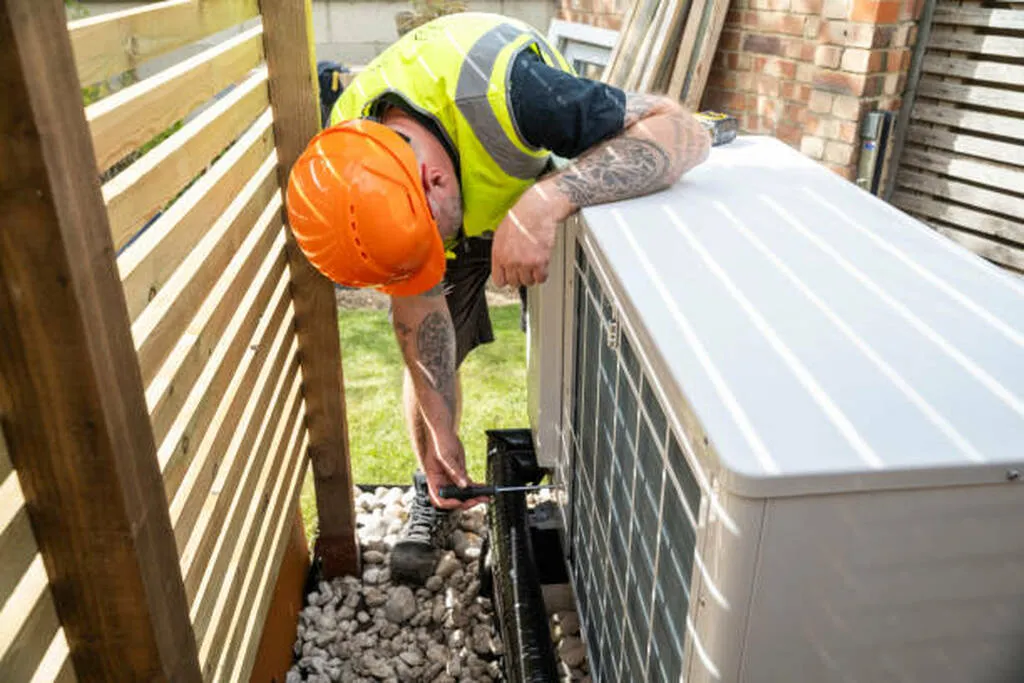
Heat pumps transfer heat from outdoors to indoors (or vice versa) using a compressor and refrigerant, and they are available as air-source, ground-source (geothermal), and ductless mini-split systems. Efficiency for heat pumps is usually expressed as COP for heating and SEER for cooling; in mild climates a heat pump can deliver several units of heat for each unit of electricity consumed, often outperforming combustion furnaces on operating cost. Ductless mini-splits eliminate duct losses and are ideal for zoned retrofits, while geothermal systems provide high, stable COPs but entail higher installation cost and site work. In the Emerald Coast’s mild winters, heat pumps frequently offer lower annual energy costs and combined heating-and-cooling convenience compared with standalone furnaces. When assessing these options, consider local electricity pricing, existing ductwork, and whether dual-fuel or hybrid configurations are appropriate for backup heat.
Research indicates that underground water source heat pumps generally exhibit higher COPs than air source heat pumps, regardless of outside temperature.
Comparing Heat Pump COP: Underground Water Source vs. Air Source Systems
In general, the coefficient of performance (COP) of a ASHP depends on the outside air conditions, while the same is not expected for an underground water source heat pump (UWS-HP) system. Few studies have examined these comparisons in colder regions. In the present study, a UWS-HP system is developed, and theCOPs of a UWS-HP (COPuws) and a ASHP (COPair) for use in greenhouse heating are investigated. The key results of the study can be summarized as follows:1)COPuwsranged from 4.0 to 5.7 and had an average value of 4.9.COPuwswas generally higher thanCOPairregardless of the outside temperature.2)COPairranged from 2.2 to 4.5 and had an average value of 3.4. Using the average hourly heat transfer coefficient obtained from the analysis of the UWS-HP,COPairwas found to decrease with decreasing outside temperature.
Comparison of coefficient of performance (COP) between an underground water source heat pump system and an air source heat pump system for greenhouse …, S Sase, 2016
What Are the Benefits and Drawbacks of Popular Heating Systems?
Evaluating benefits and drawbacks requires balancing comfort, installation cost, operating expense, and maintenance, and the table below compares typical efficiency, installation cost, and local suitability for each system type. The goal is to make tradeoffs explicit so homeowners can prioritize long-term energy savings or lower upfront spending according to their circumstances. After the table, targeted pros-and-cons lists highlight practical implications for Emerald Coast homes, particularly where humidity and mild winters influence system selection.
This table summarizes core technical attributes and typical cost/suitability considerations across leading residential heating systems.
| System Type | Typical Efficiency / Rating | Typical Installation Cost | Suitability for Emerald Coast Homes |
|---|---|---|---|
| Air-source Heat Pump | COP 2.5–4.5; SEER varies | Moderate | Excellent for mild winters and combined cooling/heating |
| Gas Furnace | AFUE 80–98% | Moderate | Good where natural gas available and for high-heat needs |
| Geothermal Heat Pump | COP 3.5–5+ | High | Very efficient long-term; site-dependent for coastal lots |
| Hydronic Boiler / Radiant | Highly variable; AFUE 80–95% | Moderate–High | Offers even comfort; retrofit complexity can be high |
| Electric Resistance (baseboard) | ~100% instantaneous | Low | Simple to install but costly to operate with high electric rates |
This comparison highlights that heat pumps often provide the best operating economy in mild-climate regions, while boilers and furnaces can excel in specific comfort or fuel-availability scenarios. The next paragraphs unpack specific pros and cons for gas furnaces and radiant floor heating.
What Are the Advantages and Disadvantages of Gas Furnace Types?
Gas furnaces typically deliver strong, rapid heating and can have high AFUE ratings when modern condensing units are used, offering a favorable upfront cost-to-output ratio in areas with affordable natural gas. Advantages include robust heating capacity for large homes and compatibility with existing forced-air duct systems, while disadvantages include combustion-related maintenance, potential safety concerns if venting is compromised, and interrupted service during gas supply issues. Common failure points are heat exchanger cracks and ignition system faults, and scheduled combustion checks and vent inspections mitigate safety risks and preserve warranty coverage. Homeowners should weigh local fuel availability and long-term gas price forecasts when choosing a gas furnace versus electric or heat pump alternatives.
What Are the Pros and Cons of Radiant Floor Heating?
Radiant floor heating uses hydronic tubing or electric mats to deliver even, low-surface-temperature warmth, improving thermal comfort by reducing cold floors and stratification. Hydronic systems excel in efficiency and large-area comfort and can integrate with boilers or heat pumps, while electric systems simplify retrofit in small zones but incur higher operating costs for whole-house use. Drawbacks include higher installation complexity and cost—especially for retrofits that require floor excavation or demo—and slower response times compared with forced-air systems, which can limit rapid temperature changes. Radiant systems pair well with high-efficiency heat sources and good insulation, and they are often chosen for bathrooms or zones where comfort and silent operation outweigh installation expense.
How Do Hybrid Heating Systems Work and Why Are They Growing in Popularity?
A hybrid heating system combines a heat pump with a furnace or another backup heat source, dynamically switching between modes to optimize efficiency and comfort across varying outdoor temperatures. The control logic typically uses an intelligent thermostat or integrated controller that assesses outdoor temperature and relative cost to decide whether the heat pump or the furnace should run, delivering heat economically during mild conditions and switching to combustion backup when heat pump COP drops. Hybrids reduce fuel use and can extend equipment life by minimizing hard starts, while still providing reliable heat on the coldest days. The following subsections explain the mechanics of hybrid systems and quantify their efficiency benefits for mild-climate homes.
What Is a Hybrid Heating System and How Does It Combine Heat Pumps and Furnaces?
In a hybrid system the heat pump handles most heating needs, with the furnace serving as secondary or emergency heat; control logic sets a balance point temperature or uses cost-based switching to determine which source runs. Installation requires compatibility between the heat pump, furnace, and thermostat, and often demands careful refrigerant charge and duct configuration to avoid control conflicts. Advantages include optimized fuel switching and smoother seasonal transitions, while installation considerations include matching equipment capacities and ensuring warranty compliance through certified commissioning. Understanding these mechanics clarifies why hybrids are attractive where winter temperatures occasionally drop below efficient heat pump operating ranges. For more information about our services, visit our services page.
What Are the Energy Efficiency Benefits of Hybrid Systems in Florida Homes?
Hybrid systems typically reduce annual heating costs by operating the heat pump through the majority of mild winter periods and only engaging the furnace when necessary, producing a measurable change in energy-bill profiles for coastal homes. In many Emerald Coast scenarios, homeowners see lower total seasonal energy use because the heat pump’s COP often exceeds the effective efficiency of combustion heating when outdoor temperatures remain moderate. In addition, hybrids may qualify for manufacturer warranties and certain incentives when installed as approved matched systems, enhancing lifecycle value. These benefits make hybrids a pragmatic compromise that leverages both electricity and combustion strengths while aligning with federal incentive programs for high-efficiency equipment.
How Do You Choose the Ideal Heating System for Your Emerald Coast Home?
Choosing the right system requires a structured assessment of climate patterns, home size, insulation, ductwork condition, and budget; a professional load calculation is usually the deciding step to confirm capacity needs. Start by evaluating the mild-winter climate where heat pumps often present strong operating-cost advantages, then map home-specific factors like open-plan versus compartmentalized layouts that influence zoning and duct losses. Cost considerations should include estimated annual fuel or electricity expenses, expected installation cost, and available incentives that change the effective payback period. The practical checklist and EAV table below help match system types to common homeowner priorities so you can move from high-level preference to a short list of suitable equipment.
When considering these factors, it is also useful to understand financing and incentive options available locally and how they affect net cost and monthly payments; the following subsections break down practical steps and where financing can assist with upgrades.
What Factors Should You Consider: Climate, Home Size, and Budget?
Start with climate: the Emerald Coast’s mild winters favor heat pumps and hybrids, which convert small temperature differences into efficient heating, reducing operating expense. For home size and layout, consider whether existing ductwork is in good condition; large homes with extensive duct runs may lose efficiency and could benefit from zoned solutions or ductless mini-splits. Budget analysis should include both upfront installation costs and projected annual energy costs over a 10–15 year horizon to estimate lifecycle cost, with an eye toward maintenance and warranty provisions. After sizing and costing, arrange for a professional load calculation to validate equipment capacity and to avoid oversizing that reduces efficiency and comfort.
How Do Local Energy Costs and Regulations Affect Your Heating Choice?
Local energy prices for electricity versus gas strongly influence operating-cost calculations; where electricity rates are moderate and winters are mild, heat pumps typically have lower annual cost than combustion systems. Building codes and permitting requirements can affect installation timelines and allowable system types, and homeowners should confirm local rules before finalizing equipment selection. For incentive information, homeowners can explore federal tax credits and local rebates that apply to high-efficiency heat pumps and hybrid systems, and some local installers offer assistance applying for these incentives. Understanding energy costs, codes, and available credits narrows choices to solutions that are both compliant and cost-effective.
What Financing and Incentive Options Are Available for Heating Systems?
Financing and incentives can materially change the affordability of high-efficiency heating equipment by lowering upfront barriers and improving return on investment for upgrades. Options commonly include vendor-arranged financing programs; one such example offered by local providers is flexible financing through GoodLeap, which spreads payments and can make higher-efficiency heat pump installations more attainable. Additionally, federal tax credits for qualifying heat pump installations reduce net equipment cost, and some local providers explicitly assist customers with applying for those credits. Combining financing with credits and potential manufacturer warranties helps homeowners evaluate monthly payment alternatives versus long-term energy savings, making the upgrade decision financially transparent.
This explanation of financing and incentives clarifies the practical next steps for homeowners who have narrowed their preferred system types and are ready to compare bids and payment options.
What Professional Services Are Essential for Heating System Installation and Maintenance?
Proper professional services are essential to ensure a heating system meets its efficiency, comfort, and longevity potential; expert installation, accurate commissioning, and scheduled maintenance protect performance and warranty coverage. Certified installers perform correct load calculations, set proper refrigerant charge or combustion tuning, and verify duct sealing and airflow—all factors that materially affect seasonal efficiency. Routine service tasks and emergency response capabilities also preserve comfort and prevent small issues from turning into costly failures. The following subsections explain why expert installation matters and outline a practical maintenance schedule with the service categories that owners should expect from a competent provider.
Why Is Expert Installation Important for Heating System Performance?
Expert installation is important because incorrect sizing, poor duct design, or improper refrigerant charge directly reduce system COP or AFUE, create comfort complaints, and can void manufacturer warranties. Common installation errors—oversized equipment, insufficient airflow, and improper venting—lead to short cycling, uneven temperatures, and accelerated component wear. Certified installers ensure systems are commissioned to specification, including airflow measurements, refrigerant verification, and thermostat setup, which preserves efficiency and extends equipment life. Given these technical dependencies, investing in qualified installation delivers measurable returns through improved comfort and lower long-term operating costs.
What Routine Maintenance Extends the Life and Efficiency of Heating Systems?
Regular maintenance preserves efficiency and reduces repair risk by addressing wear points and ensuring proper operation; typical tasks include filter replacement, coil cleaning, combustion and vent checks for furnaces, and refrigerant/pressure checks for heat pumps. Recommended professional intervals include at least annual inspections and tune-ups for both heating and cooling components, with more frequent filter checks by homeowners to maintain airflow. Preventive maintenance helps retain manufacturer warranty coverage, improves indoor air quality, and catches minor issues early, reducing emergency repairs. A clear maintenance plan reduces lifecycle cost and supports predictable system performance year after year.
Below is an EAV-style table showing common professional service categories, recommended frequency, and primary benefits.
| Maintenance Service | Typical Frequency | Primary Benefit |
|---|---|---|
| Annual Tune-up | Once per year | Maintains efficiency and detects issues early |
| Filter Replacement | Every 1–3 months | Preserves airflow and indoor air quality |
| Combustion & Vent Inspection | Once per year | Ensures safe and efficient gas operation |
| Refrigerant & System Check | Once per year | Keeps heat pump COP and HVAC cooling performance optimal |
Integrating professional support with incentives and financing options often makes high-efficiency upgrades practical; reputable local providers can combine free estimates, flexible financing, and emergency service to simplify the decision process.
Fuzzy logic control systems are an important Artificial Intelligence tool for automatic control, employing expert knowledge in linguistic rules to maintain room temperature within a required range. HVAC services can be utilized to optimize these systems further.
Fuzzy Logic Control for Optimal Heating System Temperature Management
The heating system is widely used because it can sustain wide range of temperature. So temperature control is of prime importance. The heating systems are used for controlled maintenance of indoor ambient characteristics in optimal manner. The objective of these systems is to achieve comfortable and pleasant sensation of people staying in the warm area. The heating control problem is tackled by a fuzzy control scheme. Fuzzy logic systems are employed to maintain the room temperature in required range by determines the maximum and minimum for temperature. One important Artificial Intelligence tool for automatic control is the use of fuzzy logic controllers, which are fuzzy rule-based systems comprising expert knowledge in form of linguistic rules.
Control of the heating system with fuzzy logic, 2013
Affordable Air Service, Inc., a locally owned HVAC and plumbing provider serving the Emerald Coast (including Santa Rosa Beach, Destin, and Fort Walton Beach), highlights heat pump installation among primary heating services and offers free estimates, flexible financing through GoodLeap, and assistance with federal tax credits. They provide HVAC and plumbing core services such as heat pump installation, AC repair and replacement, and water heater and drain services, and they note distinctions like Daikin Comfort Pro partnerships and associated warranties. For homeowners seeking coordinated installation, warranty handling, and local emergency response, these service features streamline upgrades while preserving the technical focus on correct sizing and commissioning.
What Are the Latest Trends and Energy Efficiency Standards in Home Heating?
Recent trends emphasize heat pump adoption, hybrid system growth, and increasing prominence of energy-efficiency ratings and incentives that lower lifecycle cost for efficient equipment. Homeowners should use metrics such as AFUE for combustion systems and SEER/COP for heat pumps when comparing models and should look for ENERGY STAR recognition where applicable. Market momentum reflects technology improvements—including improved low-temperature heat pump performance—and evolving incentive structures that make high-efficiency systems more financially accessible. The next subsections expand on why heat pumps lead growth in mild climates and how to interpret key efficiency ratings.
How Are Heat Pumps Leading Market Growth in Mild Climates Like Florida?
Heat pumps lead adoption in mild climates because advances in compressor and refrigerant technology have increased low-temperature performance, enabling efficient operation through most of the heating season in coastal regions. The integrated cooling-and-heating capability simplifies system architecture and reduces the need for separate equipment, while increasing energy codes and incentives encourage replacement of aging, inefficient systems. As federal and local incentives evolve, more homeowners select heat pumps to capture immediate operating savings and to qualify for tax credits that improve payback. These dynamics accelerate market penetration and make heat pumps a default consideration for many Emerald Coast retrofit and new-construction projects.
What Efficiency Ratings Should Homeowners Know: AFUE, SEER, and ENERGY STAR?
AFUE measures combustion heat conversion for furnaces and boilers, expressed as a percentage of fuel turned into heat; higher AFUE means less wasted fuel and lower operating cost for combustion systems. SEER quantifies seasonal cooling efficiency and is often paired with heat-pump ratings; for heat pumps, COP during heating is another direct measure of winter efficiency and should be compared across operating conditions. ENERGY STAR signals products that meet higher efficiency and performance benchmarks and can indicate models more likely to qualify for rebates or tax credits. Using these metrics side-by-side lets homeowners compare long-term operating costs and eligibility for incentives when selecting among competing systems.
List of quick comparative steps homeowners can use when shopping for water heaters:
- Check AFUE/SEER/COP ratings: Compare the model ratings to estimate annual performance.
- Confirm warranty and installed-match requirements: Ensure components are installed per manufacturer instructions to preserve warranties.
- Ask about incentives and financing: Explore tax credits, rebates, and payment options to reduce net cost.
These steps provide a concise purchasing checklist that connects technical metrics with practical procurement actions, helping homeowners make informed, long-term decisions.